
Following is a letter to Burnaby residents from Mayor Mike Hurley
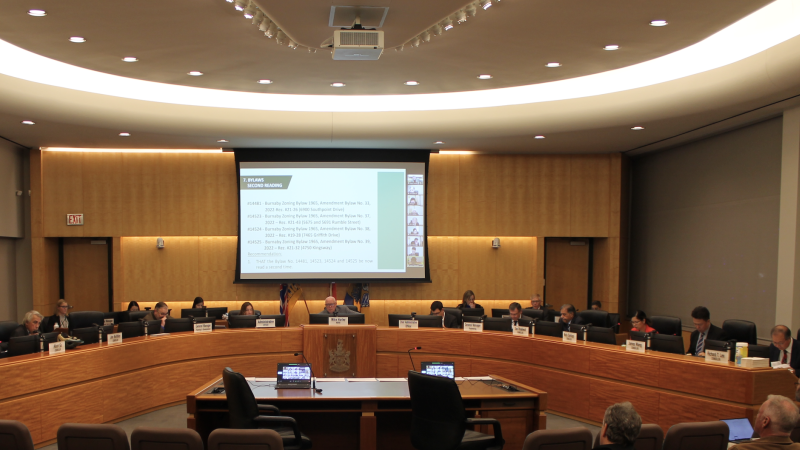
Public hearings are one of the most fundamental parts of our local democracy. As Mayor, I have sat through hearings that run more than seven hours, and last Monday, over five hours were dedicated to hearing from residents on the updated R1 zoning bylaws in response to new provincial housing legislation. Every speaker gets three minutes so all voices can be heard, and since the pandemic, people can now participate online as well.
What many don’t realize is that during these hearings, the Mayor and all City Councillors follow strict rules: we cannot respond or correct the record - even when comments are inaccurate. It can be challenging, but our role is simply to sit and listen. If we started responding, those five hours would quickly double, when ultimately the main reason why public hearings work is because they give residents the space to speak without interruption.
But silence for those hours in the Council Chamber certainly does not reflect our stance on this topic. Last week, a meeting with the mayors of Metro Vancouver led to me sending a letter to Premier Eby on behalf of 16 mayors. We are calling on the Province to pause and reconsider its recent housing legislation.
Cities coming together
The Professional Reliance Act was the breaking point, and we have decided it is time to stand together against this growing wave of provincial bills. If passed, Bill 216 would blur the line between technical expertise and democratic governance, reduce oversight, sideline local voices, and ultimately lead to more work and higher costs later in the development process. Enough is enough. Our collective message is simple: stop trying to control cities. Give us the space and support to plan properly, and we will deliver more affordable housing.
These bills have created confusion, division, and real challenges for cities trying to plan growth responsibly. In the letter, we explained that the new rules were developed without input from cities. They don’t reflect the realities of our region, and could lead to major infrastructure costs, unrealistic housing targets, and development that doesn’t align with local neighbourhoods or transit planning.
We are asking the Province to repeal these one-size-fits-all laws and work with municipalities on solutions that increase housing while still allowing cities to plan responsibly and sustainably for their communities.
At last week’s public hearing, we saw firsthand the strain and divisiveness that these provincial decisions have brought into our community in Burnaby.
Clarity on recent changes to Burnaby’s zoning bylaws
We heard a wide range of perspectives, from builders and homeowners who saw new opportunities for housing and multi-generational living, to those worried about overcrowding, infrastructure strain and growing uncertainty for long-time residents.
People are very passionate about this, but it was also clear that there is still a great deal of confusion on the facts.
Firstly, let’s be clear that these changes were brought in through provincial legislation. The province has the authority to set these requirements, and any changes to the legislation must come from the provincial government. Municipalities can set bylaws but must operate within the legislation set by higher-level governments.
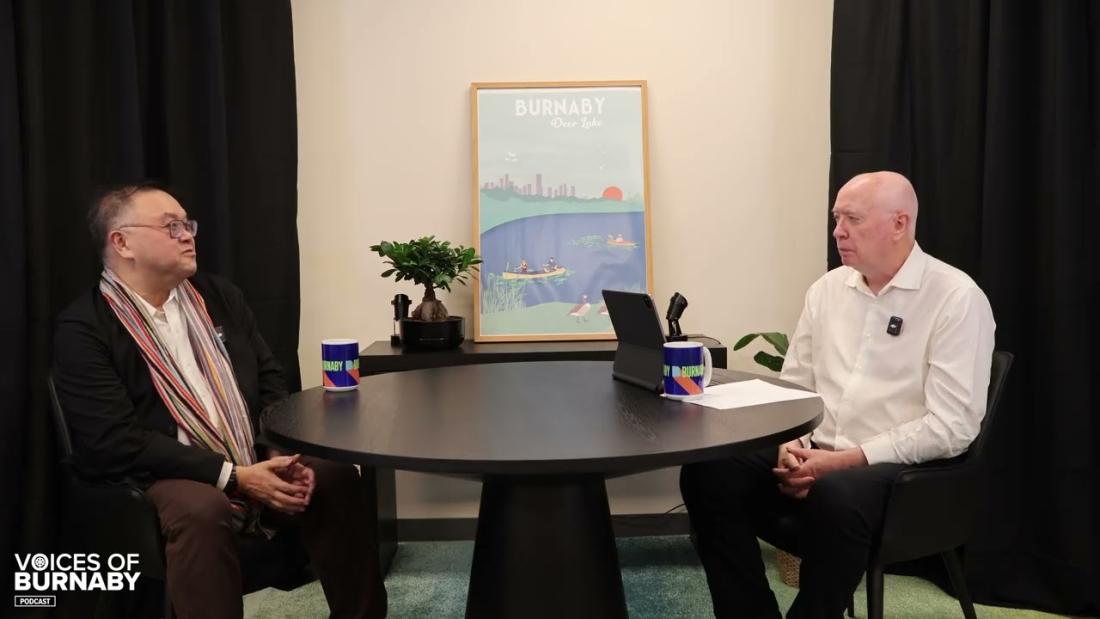
Podcast Episode 1: Housing, Affordability and City Planning in Burnaby - with Andy Yan
It’s also important to remember that the City of Burnaby does not build housing - private residents and developers do. Our role is in planning, which should mean ensuring development aligns with City plans, community priorities and infrastructure capacity. Nevertheless, local government cannot compel developers to initiate construction.
Recent changes to Burnaby’s zoning bylaws were made to comply with the Province’s Bill 44 (2023), which requires municipalities to allow increased density - up to four units per lot, and up to six units near frequent transit. Burnaby’s approach is to meet these requirements while taking additional steps to address local impacts within the narrow authority the Province now provides.
Burnaby must follow provincial minimums for units per lot, while guidelines for height, setbacks, lot coverage and storeys can be adjusted only within the practical constraints of fitting the required units safely on a lot and in compliance with building standards.
So those changes now mean that Burnaby’s height regulations are one metre lower than the Province’s guidelines of at least 11 metres for three-storey townhouse zoning.
Our new zoning bylaw also permits less lot coverage for new buildings than the Province recommends - that is 40-50% compared to the Province’s 60%. This leaves more space for landscaping, trees and parking.
Burnaby will require builders to build homes further from the edges of the property than the Province recommends - meaning a four metre front yard setback versus the Province’s two metres.
Parking requirements in our City will also exceed provincial guidance - but only where the City has authority. For transit-oriented areas and areas with frequent bus service, provincial rules allow builders to exclude parking. This accounts for roughly 57% of Burnaby’s residential lots.
So our aim is to support growth that is well-planned, sustainable, and guided by the needs of residents and communities. Growth should occur in the right locations - where schools, transit, parks and utilities can handle it - helping make housing more affordable and enhancing quality of life.
Growth and collaboration
Before the Province’s mandate, Burnaby was advancing incremental changes for “missing middle” housing based on community feedback rather than a one-size-fits-all approach. Through the City’s Housing Choices program in 2022 and 2023, extensive engagement showed that the majority of residents supported gentle density, provided it was implemented sensitively.
So what more can our residents do about this? These same provincial changes have removed public hearings for most routine residential rezonings, limiting opportunities for direct local input leading to more built-up frustration. So the public needs to reach out to the provincial government through their MLAs, as they’re the only ones who can make a change.
My overall feeling watching last week’s public hearing was one of sadness. Differing opinions is healthy, but the community is very divided on this. That’s why the letter sent to Premier Eby, on behalf of 16 Metro Vancouver mayors, called for a collaborative dialogue to develop mutually supported housing solutions for all our residents and communities.
There is a better way, if we all work together.