Following is a letter to Burnaby residents from Mayor Mike Hurley
As a Burnaby resident, about two per cent of your property tax goes to Metro Vancouver’s regional district services, as well as roughly $65 a month for water, sewer and solid waste which are collected through utility charges. That may be a relatively small portion of a household budget, but I don’t think people should fairly judge Metro Vancouver–or the costs associated with it–without understanding what that money actually goes toward.
At its core, Metro Vancouver exists to deliver essential regional services that are simply too large, too complex, and too expensive for individual municipalities to provide on their own. Drinking water, wastewater treatment, and solid waste management account for roughly 90 per cent of Metro Vancouver’s budget. These are not optional services–they are the systems that make dense, modern communities possible.
Every day, Metro Vancouver delivers around one billion litres of drinking water from three protected mountain reservoirs to homes and businesses across the region. That water which runs out of our taps in Burnaby is consistently ranked among the best drinking water in the world.
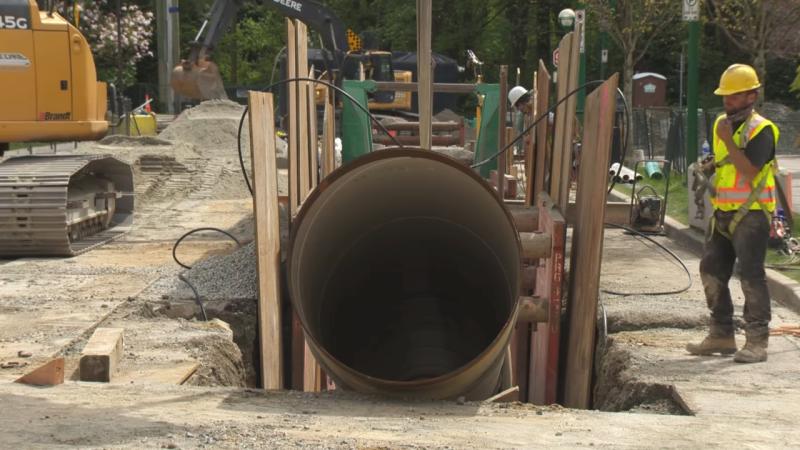
Protecting those watersheds, maintaining hundreds of kilometres of large-diameter transmission pipes, and ensuring uninterrupted delivery is work that requires regional coordination and long-term planning. The same is true for wastewater. About 1.2 billion litres of wastewater are treated every day through five regional treatment plants.
Services at a cost Burnaby could not achieve alone
Burnaby–like any single city–could not afford, or realistically attempt, to build, operate, and maintain infrastructure at this scale, nor would many residents welcome a major treatment plant costing billions near their neighborhood. Burnaby does not–and realistically could not–deliver these services independently with near the efficiency or affordability achieved through regional delivery.
Each community contributes its piece, and the region benefits from shared capacity, shared costs, and coordinated planning. Most of our waste water goes to Delta for example–while Burnaby’s incinerator alone manages roughly a quarter of the Lower Mainland’s waste, which along with landfills and recycling systems is another key service provided by Metro Vancouver.
On average, Burnaby residents pay about $18 per month for drinking water, $6 for solid waste, and $45 for liquid waste. In addition to these utility services, the rest of Metro Vancouver’s regional functions–such as air quality management, regional parks, and regional planning–cost Burnaby residents less than $7 a month.
A snapshot of Burnaby’s economy as our task force gets to work
Metro Vancouver’s non profit housing corporation operates at no cost to taxpayers and provides homes for over 10,000 people, including hundreds in Burnaby. For services of this scale and importance, that is a good deal in my book.
The reality of making structural governance changes
Acknowledging the value of Metro Vancouver’s work does not mean ignoring where improvements are needed. There are very real frustrations people have with delays and governance challenges. I share those frustrations. Particularly around the North Shore Wastewater Treatment Plant.
The key decisions that led to today’s challenges were made before most of the current board and management team were in place. What matters now is taking the lessons forward, improving oversight, and delivering infrastructure that will serve residents for the next century.
Burnaby is leading that charge, represented at Metro Vancouver through my role as Chair of the Board, three Burnaby councillors sit on the board as elected representatives, and all Burnaby councillors serve on at least one Metro Vancouver committee where they can represent the best interests of our city.
That representation matters as we work to bring Burnaby’s approach to long-term infrastructure planning and fiscal discipline to the regional table. Because a strong Metro Vancouver is essential to Burnaby’s productivity and the quality of everyday life in our city.
It’s important to be honest, however, about what Metro Vancouver can and cannot change on its own. The board operates within a framework set by provincial legislation, so structural governance changes cannot be decided unilaterally–they require provincial involvement and, in many cases, legislative approval.
That process takes time, and is not in our hands. We’ve established a governance committee, with provincial representation, to oversee reforms following an independent review from Deloitte Canada. Their 49 recommendations are either complete, underway, or the Province is now engaged to implement those which require their agreement.
We are eager to move this work forward, but it’s equally important that these long overdue changes are done right.
One of the realities right now is that most people in Burnaby only hear about Metro Vancouver when something goes wrong–and too often, those moments become politicized. When systems work–when water is clean, wastewater is treated, and garbage disappears–that day in day out success is largely invisible.
Watch a 360 tour of Metro Vancouver's waste-to-energy facility in Burnaby
We need to do a better job of explaining what’s working, why it matters, and the scale of the essential work being delivered every single day to make it happen. Because in Burnaby, and across the region, residents are paying for it.
The true measure of success is in your glass
Before I became heavily involved in the planning, frankly I didn’t even fully understand the scale or complexity of this work either. But since spending time on most of the project sites across the region, meeting frontline workers, engineers, operators, and scientists who take enormous pride, passion and are so skilled at what they do, I have become fascinated with these massive infrastructure projects.
Think about it–last year Metro Vancouver provided Burnaby with a total volume of 39,468,447 cubic metres of water, from a system comprising of over 520 km of transmission water mains.
Metro Vancouver recently completed the Second Narrows Water Supply Tunnel, a one-kilometre tunnel 30 metres below the Burrard Inlet between Burnaby and North Vancouver. This was massively complex work, and now increases our reliable drinking water capacity, even in the event of a major earthquake.
During the Covid pandemic, Metro Vancouver scientists used wastewater sampling to help health authorities track and respond to the spread of the virus. Similar vital work happens quietly, every day, and it plays a critical role in protecting public health. The essential services Metro Vancouver provides touch daily life in countless ways, and they are genuinely the envy of other regions I speak with. This is something we in Burnaby should know about–and be proud of.
Despite having 300 projects on the go at any time–from planning all the way to the implementation stage–last year we reduced our operating budget by more than $360 million over the next five years. For residents, that means a cost increase of just 2.5 per cent this year–less than inflation, and only about $22 more per household than last year. As a Board, we’ve also supported reviewing possible changes to the size and structure of all four Metro Vancouver legal entities, with important decisions scheduled for this year.
But the true measure of success isn’t in reports or headlines. It’s Burnaby residents turning on their tap in the morning and pouring a glass of clean, refreshing water. It’s flushing a toilet at work without giving it a second thought. When these services just work seamlessly, that’s Metro Vancouver working for Burnaby.
Supporting our seniors in Burnaby–with Joanne Morgan