Following is a letter to Burnaby residents from Mayor Mike Hurley
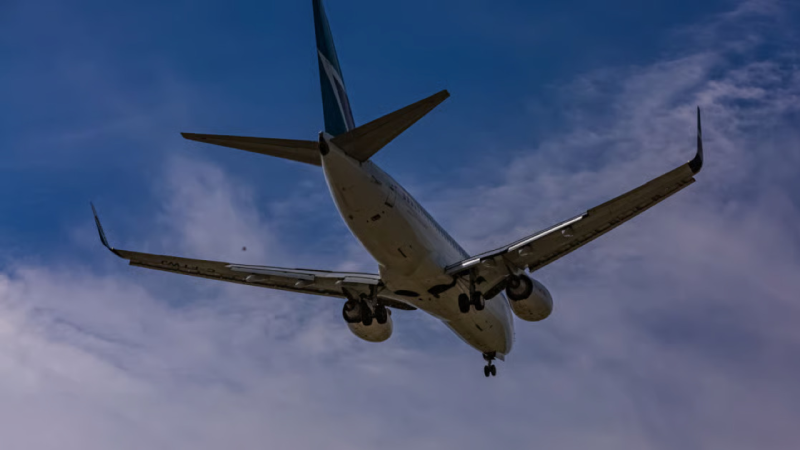
During my recent Walk, Roll and Chat, residents from the Capitol Hill neighbourhood in North Burnaby spoke to me about the impact the new YVR flight paths are having on their community—and how tired they are of living under the noise of constant planes week after week.
This is not a new issue, nor are they alone in their concerns. This is a topic the City has been receiving emails, letters and hearing from residents about for years. The difference today is that we are no longer discussing projected impacts, but what residents are experiencing in their neighbourhoods right now. The question is whether the actual effects of these flight path changes align with what residents and the City were told to expect, which is why we are calling for an independent review.
Concerns pre-implementation
As far back as 2019, the City of Burnaby was engaged with NAV CANADA regarding the Vancouver Airspace Modernization Project. When proposed flight path changes were released for public consultation, residents from Capitol Hill and other North Burnaby neighbourhoods spoke out about the potential effects on their communities.
Residents questioned whether concentrating aircraft traffic along a narrow corridor over North Burnaby would bring increased noise to neighbourhoods that had not previously experienced this level of overflight activity.
They also raised concerns about the modelling used to predict future impacts, whether the proposed route was truly the only available option, possible alternative flight paths, the projected volume, frequency and timing of flights, the broader environmental and air quality effects of the proposal and risk considerations over industrial lands along the North Burnaby shoreline.
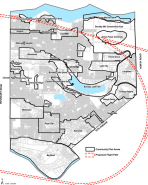
The City raised many of those same questions. In February 2023, Burnaby staff reported to Council on the proposed changes and outlined concerns regarding impacts on existing and future residential neighbourhoods. The City noted that the proposed flight path crossed areas including Capitol Hill, Lochdale and Lougheed—communities that are expected to accommodate significant population growth in the years ahead as Burnaby continues to add necessary housing and jobs, including those mandated by the Province.
The City called for further engagement with NAV CANADA, requested additional information regarding noise impacts, advocated for baseline noise measurements before implementation and raised the need for additional Noise Monitoring Terminals within Burnaby so that actual impacts could be compared against forecasts for ongoing review. We also specifically asked for more information on how noise impacts would be experienced at higher elevations and in high-rise buildings, particularly in growing town centre areas like Lougheed.
Post-implementation impacts
The City also requested that NAV CANADA continue discussions with Burnaby before making final recommendations and explore opportunities to refine and improve the proposal. The project nevertheless moved forward, as they maintained that the proposed alignment could not be altered within safety parameters. The new Standard Terminal Arrival Routes were introduced in November 2025, with the second phase—satellite-based RNP arrival procedures—following in February 2026.
At the time, residents were assured that extensive modelling and consultation had been undertaken, and noise forecasts were presented. NAV CANADA’s position was that the redesign had been developed within strict Transport Canada design criteria and that, where possible, routes had been placed over less populated areas.
Over the past several months, I have received correspondence from residents who all say the impacts being experienced in North Burnaby are consistent with the concerns they raised during consultation. Most recently, residents again brought these concerns directly to me during my Walk, Roll and Chat event.
Walk and Chat returns for an eighth year of listening, movement and community
Residents in Capitol Hill point to the noise forecasts presented during consultation, which indicated aircraft noise levels of approximately 55 dB(A) over parts of North Burnaby (and 60 dB(A) in east Burnaby).
They have since collected measurements which regularly record aircraft noise events between approximately 63.5 dB(A) and 66.6 dB(A). For reference, consultation materials noted noise levels of 55-60 dB(A) can be as loud as a normal conversation between people. Because decibels are measured on a logarithmic scale, residents explained that these differences are not minor variations but represent a substantially different experience from what was presented during consultation.
Residents have also raised concerns about the cumulative impacts on neighbourhood livability, potential health consequences, the enjoyment of outdoor spaces, the experience of families living beneath the flight path and the long-term attractiveness of North Burnaby communities. Residents have expressed concerns about what this could mean for property values, local businesses, future investment and the appeal of neighbourhoods that Burnaby is planning to grow over the coming decades.
Calling for an independent review
That is why we are calling for an independent post-implementation review of these flight path changes. In fact, such a review is entirely consistent with what residents have been requesting since this process began. In June 2023, after gathering more than 1,200 signatures, residents submitted a petition to the federal government calling for an independent review of the proposed flight path changes and their potential impact on thousands of residents.
In correspondence with the City in June 2023, NAV CANADA stated that following implementation it would conduct a post-implementation review to assess operational performance and any community concerns that had been raised. YVR has also stated publicly that a review will occur 180 days after implementation of all new procedures.
Residents are now asking that this work be undertaken independently so that the findings command public confidence.
It should compare actual measured conditions with the forecasts used during consultation. It should assess whether aircraft noise experienced by residents aligns with the projections that informed decision-making and the impacts this is having.
It should assess whether aircraft noise impacts differ from projections in areas with significant topography and elevation changes, as well as for residents living at higher elevations in Burnaby's high-rise communities.
And if significant discrepancies are identified, it should recommend what actions should follow. Residents have suggested options ranging from flight path refinements and operational adjustments to discussions regarding mitigation measures such as overnight curfews and compensation where appropriate.
Burnaby does not regulate Canadian airspace. That responsibility rests with the federal government and its agencies. NAV CANADA operates Canada's civil air navigation system, while Transport Canada establishes the regulatory framework under which those decisions are made.
This week, we will once again be writing to and raising these concerns with NAV CANADA. We will also engage local Members of Parliament and bring the matter to the attention of the federal Minister responsible.
Our request is for an independent review to measure what is actually happening, compare it against what was predicted and make the findings public. That is what Burnaby residents deserve.
Transit’s vital role in connecting Burnaby and the region–with TransLink CEO Kevin Quinn