Burnaby enters the second half of 2026 with strong momentum, as our local companies gain recognition on the global stage and we advance an ambitious capital program that will replace aging civic facilities and reshape everyday life for our residents.
We have an events and festivals calendar that brings people together and showcases this great city, along with collaborative and innovative planning that is managing growth in challenging times while keeping Burnaby safe, stable and delivering sustainably for all of our diverse communities.
Here are five key areas shaping our approach for the second half of the year.
Public safety and preparedness
In British Columbia, 886,300 hectares burned during the 2025 wildfire season—well above the province's 10-year average. Every dollar invested in pre-disaster mitigation can save between $7 and $13 dollars in post-disaster assistance.
As a firefighter for more than 30 years let me tell you, preparedness is the most important step. Our own Burnaby Mountain sits at the intersection of major forested areas, critical infrastructure and a growing residential population—which is why the City has partnered with SFU to develop and install a new wildfire detection system that combines smoke-detection cameras and ground-based sensor nodes to identify heat and smoke in near real time.
Last month, in the middle of the afternoon in an area near local businesses, the system detected its first fire. The alert allowed our team to prepare before the first call came in. This technology will be crucial in the weeks and months ahead.
At the same time, construction of Burnaby’s new RCMP Community Safety Building is now past the halfway mark. Scheduled for completion next year, it will support the second-largest RCMP detachment in Canada and replace a facility that has served the community since 1967. We are committed to ensuring our brave first responders have the tools and facilities they need to keep Burnaby safe.
Events, festivals and community connection
You know it’s the start of summer in Burnaby when more than 60,000 people fill the streets for Hats Off Day in the Heights, and Deer Lake Park is filled with families for Burnaby Blooms.
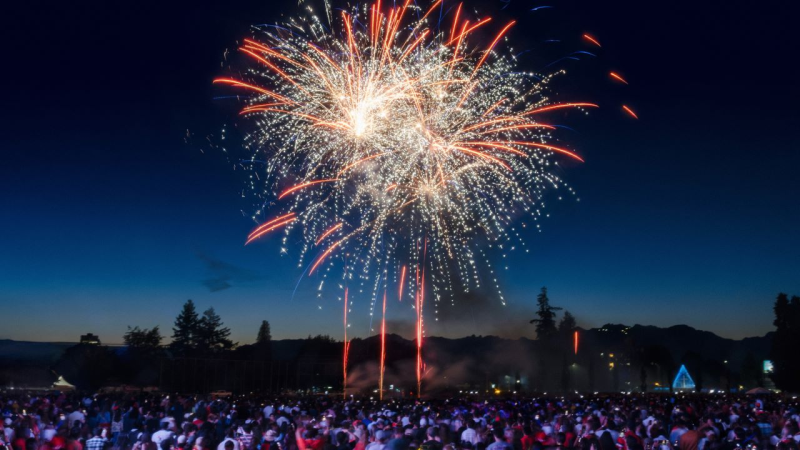
But that was just the start of it. We have Canada Day coming up which brings huge celebrations across the city, anchored by StreetFest on Central, alongside programming at Edmonds Plaza, Burnaby Village Museum and Civic Square. As well as the return of large-scale outdoor music, including Symphony in the Park by the Vancouver Symphony Orchestra and Opera in the Park by Vancouver Opera.
Across the year, Burnaby hosts a packed calendar of community and cultural festivals—from the Burnaby Blues + Roots Festival in August, which brings thousands of people together for a full day of live music, to smaller neighbourhood festivals and street events happening across the city.
The city hosts close to 30 cultural festivals a year—a significant number for a city of this size—allowing us to celebrate and bring together our diverse communities. As well as supporting our local economy, showcasing the best of Burnaby.
One of those is the Pinoy Festival at Swangard Stadium this weekend, hosted by Burnaby’s Filipino community with wonderful cultural performances, live music, food vendors and community activities. And the activity runs right through to the end of the year, with the annual Pat Quinn Classic in December bringing teams from across the country and beyond to compete in a tournament which has been part of Burnaby’s sports calendar since 1962 and generates $2.3m in economic benefit.
Affordable housing led by local planning
Given the population growth experienced in the city, and now the pause on major affordable housing funding streams in the latest BC budget—Burnaby has stepped up for our residents, despite our municipal responsibilities being planning, zoning and infrastructure.
The Burnaby Housing Authority acts like a developer while delivering housing for public benefit and helping fill gaps in Burnaby’s housing supply. They are focused on building non-market and below-market rental housing.
Short-term thinking risks long-term consequences for affordable housing in Burnaby
Only 9 per cent of the city's housing stock consists of rowhouses and townhouses. Yet for many families, these homes provide the additional bedrooms, outdoor space and flexibility that apartments often cannot, while remaining more attainable than a detached home. That is why family-oriented housing and townhomes are a priority for the Burnaby Housing Authority.
Their first two projects are now moving ahead and will deliver 387 new rental homes across the city, representing an important first step in establishing a long-term pipeline of affordable housing that is owned and delivered with Burnaby residents' needs in mind.
We have also responded to the Province’s one-size-fits-all zoning legislation. While meeting provincial requirements, Burnaby reduced maximum building heights to 10 metres, increased setbacks, reduced lot coverage, limited rear-yard buildings to two storeys and 7.5 metres, and changed height measurements to be taken from the lowest point of a lot rather than the midpoint approach recommended by the Province.
With those bylaws now in place, we will begin to see their impact reflected in new applications and developments as the year progresses.
However we will continue to push for truly collaborative solutions to affordable housing centred on local planning, ensuring the right type of housing is built in the right places where they can be supported by the services and infrastructure required.
Historic capital investment
We’re now past the halfway point on a record capital program, one of the largest municipal build-outs anywhere in Canada. Major projects are moving ahead, with the Burnaby Lake Recreation Centre and the Cameron Community Centre and Library both targeted for completion in 2028, while the new Shadbolt Centre for the Arts is on track for 2027.
The Brentwood Community Centre is also progressing, with construction set to begin in 2027. Alongside that, we’re delivering major infrastructure to connect our city — including the Burnaby Lake overpass, now open as a dedicated pedestrian and cycling crossing over Highway 1 linking Burnaby Lake and Deer Lake.
Once completed, the new Holdom overpass project will improve connections across the rail corridor and expand road capacity and access in north Burnaby. We’re also advancing a major sidewalk expansion program, with new sidewalks planned and being built on streets like Gilmore Avenue, Carleton Avenue, Triumph Street, Rosser Avenue and Madison Avenue, alongside priority routes near schools and transit across the city—adding kilometres of new connections to improve safety, accessibility and everyday mobility.
Economic resilience and growth
The Mayor’s Task Force on Burnaby Economic Growth and Resilience has now completed its work, with its final report and recommendations being released next week. The report will help shape the City’s approach to long-term economic development, innovation and investment attraction as Burnaby continues to grow.
Read this year's Burnaby State of the City address
At a time when cities are facing economic pressures originating beyond our borders, Burnaby companies continue to perform and gain international recognition on the global stage. Speaking at Web Summit last month, we were delighted to see Burnaby-based companies singled out as the standout examples of innovation on the main stage—both on opening night and on day one opening.
We’re supporting that growth by improving how approvals work—permit processes have been modernised with applications now submitted and tracked online, alongside dedicated pathways to help advance more complex developments more efficiently.
The FIFA World Cup this month and next will also drive significant economic activity across the region, creating opportunities for our hotels, restaurants and bars, and supporting longer-term growth in tourism and investment.
Over the course of the tournament, around 360,000 visitors are expected to come to the region, with roughly a third coming from other provinces within Canada and a third from international markets. Over the next five years, the event is projected to generate around one million additional travellers, with many expected to return to explore more of Burnaby or take advantage of our location and connectivity.
A critical priority for everyone in the city for the remaining months of 2026, is the delivery of Phase 2 of Burnaby Hospital.
During our recent positive meeting with the Premier, we were clear that the full $1.8 billion Phase 2 capital funding, already approved, must be set aside in Treasury and explicitly earmarked for the Burnaby Hospital redevelopment. And we need a clear timeline.
Ultimately the hospital must be back on next year’s provincial budget, and discussions with the Premier and his office will continue over the coming weeks and months to ensure it is.
Burnaby as a destination for World Cup, sport, culture & food—with Tourism Burnaby CEO Chris Peters