Following is a letter to Burnaby residents from Mayor Mike Hurley
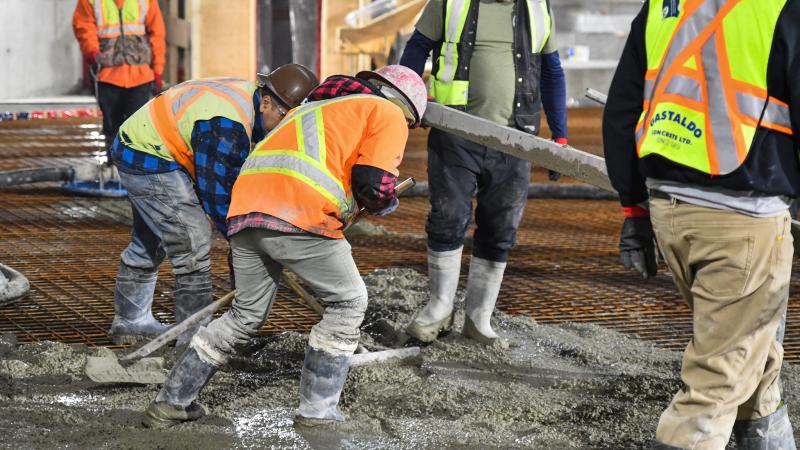
Construction plays a vital foundational role in shaping our region—delivering the housing, commercial and industrial infrastructure we need while supporting economic growth, creating jobs and building strong, resilient communities. None of that happens without collaboration between industry, government and the private sector.
Thank you to the Vancouver Regional Construction Association for the invitation to participate in their panel for the launch of Build Lower Mainland earlier this week. As a Red Seal carpenter by trade, it was especially meaningful to join industry leaders and professionals for this important conversation.
VRCA has identified three asks for all orders of government: greater predictability in costs and procurement, faster and more consistent approvals, and support for building the skilled workforce pipeline needed for the future.
We are making progress in Burnaby, having reduced residential permit processing times by 75 per cent while continuing to modernize approvals through online permitting, digital permit issuance and AI-assisted zoning reviews. That commitment to continuous improvement is also reflected in the decision to commission an external and independent review of our record capital construction program.
While the Building Burnaby Better report confirmed Burnaby compares favourably to its municipal peers and recognized the professionalism of our staff, it also identified opportunities to strengthen our long-term planning.
There’s no question that we’re navigating a challenging economic environment. Rising costs, market uncertainty, labour pressures and shifting investment decisions are affecting organizations across every sector. But three things stand out to me as integral to meeting these challenges and supporting long-term growth:
1. Local government and partners must be involved in the discussions from the start
It is critical that local governments are involved from the outset in decisions that directly affect the communities we were elected to represent. We have seen what can happen when that does not occur, through recent provincial housing and zoning legislation.
This one-size-fits-all approach to housing policy across British Columbia treats Burnaby, Vancouver and Victoria as though we all face the same circumstances, and ignores municipalities like Burnaby having already delivered significant growth through planning around our four town centres.
Local planning matters because it is how we build the right homes, in the right places, for the right reasons. Growth must be accompanied by the infrastructure and services needed to support it—water, sewer, transportation networks, parks, schools, community facilities and public safety services. When density is added without sufficient consideration of those requirements, the increased costs to deliver them are ultimately borne either by developers through increased charges, which can translate into higher housing prices, rents and utility costs, or directly by existing residents through higher taxes and fees.
Burnaby's long-standing approach has been that growth should pay for growth, ensuring those benefiting from additional density contribute toward the infrastructure and amenities required to support it rather than shifting the burden onto existing taxpayers. Although careful local planning and effective funding helps to direct growth to areas where it can be supported most efficiently, which can reduce these costs significantly and provide much greater certainty, which is great news for developers and especially for residents.
Communities need to be brought along in these decisions and municipal governments are closest to residents and best understand neighbourhood needs, infrastructure capacity and long-term community goals. Those local perspectives should help shape policy from the beginning.
Developers and builders also need a seat at the table. They are the ones responsible for making projects viable and getting homes built. They do not want to build homes that people do not want, cannot afford or cannot purchase. With nearly 4,000 vacant and unsold housing units already sitting across Metro Vancouver, the challenge is not simply approving more housing—it is ensuring we are enabling the kind of housing that is actually needed and can be successfully delivered.
Burnaby currently has approximately 25,000 approved housing units that have not yet proceeded to construction, and the City has no authority to compel developers to begin building or require units to be occupied. This reality highlights the limitations of this one-size-fits-all approach and policies developed without sufficient local input and experience.
2. Certainty matters: the details will determine success
The federal and provincial governments' recent commitment of more than $5 billion over 10 years toward infrastructure investments and development charge reductions is welcome news. However, announcements alone do not build homes, deliver infrastructure or improve affordability. Success will ultimately depend on the details, and many of those details remain unclear.
The key question is whether the infrastructure funding provided to municipalities will fully replace the revenues being forgone through development charge reductions.
Those charges help fund the roads, water, sewer, drainage, parks and community infrastructure required to support the additional density being created by new development.
There are also important unanswered questions around implementation. Which communities will qualify? What forms of housing will be eligible? Until all of our questions are answered clearly and adequately, municipalities will be unable to determine whether the program works for their communities and will be hesitant to participate, limiting the program's effectiveness from the outset.
Certainty matters. Throughout the VRCA discussion, industry leaders repeatedly emphasized the importance of predictability when making investment decisions. Builders, developers and contractors plan projects years in advance. They need clarity on costs, timelines, eligibility requirements and implementation schedules to secure financing, allocate capital and determine whether projects are viable.
Until the details are known, neither municipalities nor industry can properly assess the impacts, plan for the future or answer queries from local residents and businesses. Commitments and funding announcements are always welcome, but they only achieve their intended outcomes when backed by clear implementation plans, timely details and the certainty needed to turn them into action.
3. Sustainable growth requires consistent building and long-term planning
Industry leaders are clear on this—now is precisely the time to build. Construction costs have largely stabilized following years of significant escalation, but they will not remain there indefinitely. If governments wait until demand and market activity fully rebound, they will once again be competing for labour, materials and construction capacity at much higher prices.
There is also a workforce reality that cannot be ignored. Construction is not a switch that can simply be turned on and off. When projects are delayed, workers leave for other opportunities and capacity is lost. So much work has been undertaken by the industry to attract young people to the trades, and they are now facing the reality of being unable to pick up an apprenticeship or consistent work.
When governments eventually try to catch up, the labour force required to deliver those projects efficiently is no longer readily available, driving up costs and creating further delays.
BC Budget 2026 has effectively reduced the pipeline of projects moving forward across several critical sectors. The Province has paused expansion of affordable childcare, it has also reallocated nearly $1.4 billion in housing investments and indefinitely suspended the Community Housing Fund. At the same time, funding for major public infrastructure projects, including one as critical as Burnaby Hospital Phase Two, have been paused.
The concern is we are repeating mistakes we have seen before. Housing, childcare, healthcare and infrastructure needs do not disappear when investment is postponed. They continue to grow leading to costly delays and expensive catch-ups when the market does pick back up.
That is why planning must extend well beyond political cycles. A predictable pipeline of housing, infrastructure and public projects well into the future allows governments, industry and workers to plan with confidence, avoids costly boom-and-bust cycles, and ensures communities have the facilities they need when they need them—not years after demand has already arrived.
Ultimately, failing to plan ahead always costs more, and those costs fall on residents.
Realities of delivering major infrastructure in Burnaby—with Ventana Construction's Dan Marsolais