Following is a letter to Burnaby residents from Mayor Mike Hurley
Trees cover almost a third of our city, from the forests of Burnaby Mountain and Central Park to those lining our neighbourhood streets. Together, they form an urban canopy that is pivotal to Burnaby’s identity and to the quality of life our residents enjoy.
We have a responsibility to ensure that, 100 years from now, people will be walking through an even greener city and benefiting from the trees we plant and protect today. That means making thoughtful choices and taking a long-term approach as Burnaby faces the challenges of any growing city.
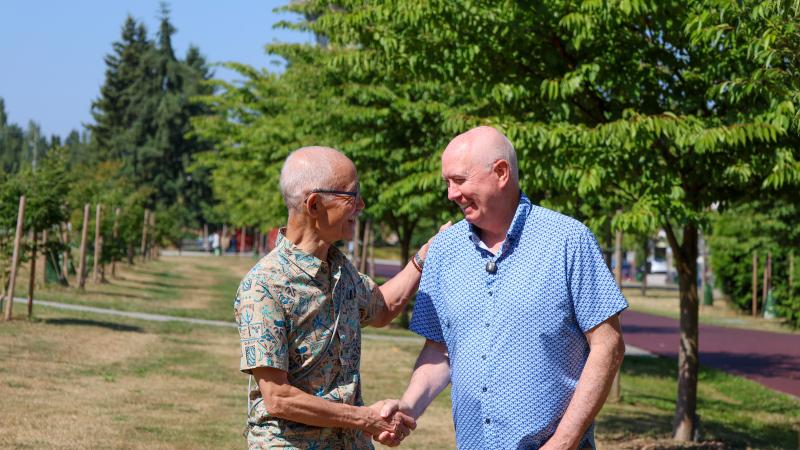
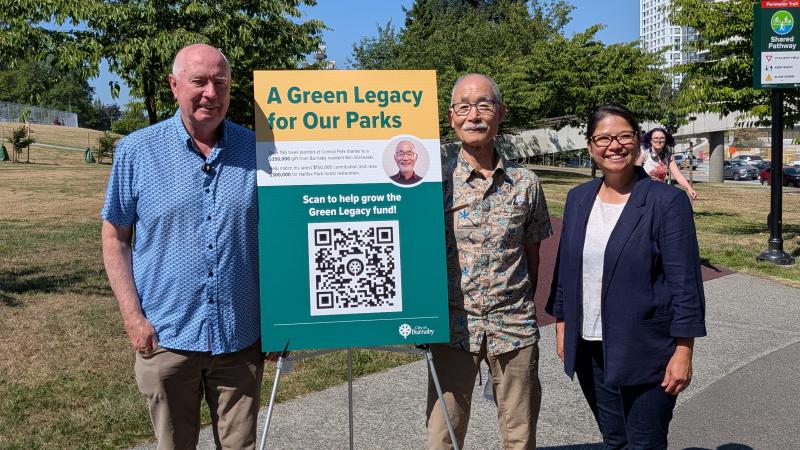
Ken Shinozaki’s record-breaking donation last week is an inspiring example which recognizes the importance of trees to Burnaby today, but even more importantly, our responsibility to the generations that will follow us.
This donation includes $350,000 to fund the planting of more than 150 trees at Central Park, while the remaining $150,000 is helping launch the restoration of the forested area at Halifax Park.
Through the Green Legacy Challenge, the City is inviting the community to help bring the total funding for Halifax Park to $300,000. Residents can contribute through the City’s Green Legacy Fund on CanadaHelps. Together, we can build on Ken’s generosity and help protect this important forest for future generations.
How does Burnaby’s current tree canopy compare?
In 2022, trees covered 32 per cent of the city, representing about 2,900 hectares and more than 600,000 trees. More than 70 per cent of that canopy is under public management. Burnaby’s canopy coverage is higher than the 29 per cent regional average and the 21 per cent average among selected municipalities outside the region.
During the 2025–2026 planting season, the City planted 8,051 trees, the largest number we have ever planted in a single season.
Our target is to increase Burnaby’s tree canopy to 40 per cent by 2075. The City deliberately chose a long timeframe because trees take decades to mature. We must also recognize that development and natural aging will remove some of our existing canopy along the way. How well we manage those losses, replace trees and care for what we plant today will be central to the success of our efforts.
But this work goes beyond reaching a canopy target. There are many unknowns when we look decades into the future. We need to build an urban forest that is not only larger, but also healthy, diverse and resilient enough to withstand changing conditions. We want Burnaby’s urban forest to thrive for hundreds of years. This is a truly multigenerational undertaking.
So, what are the benefits of our tree canopy to Burnaby residents?
Burnaby’s urban forest delivers an enormous range of benefits, often referred to as ecosystem services. They provide shade and help cool our streets and neighbourhoods during hot weather. Their roots hold soil in place, while trees and the soil around them absorb stormwater and help reduce flooding. Trees also improve air quality and make our city more resilient.
They contribute to our physical and mental well-being by giving us places to spend time in nature and strengthening our connection to the natural environment and to one another. Trees also make Burnaby more beautiful, welcoming and attractive. That helps make our city a place where people want to live, while also helping to attract businesses such as our thriving film and television industry and the workers they need.
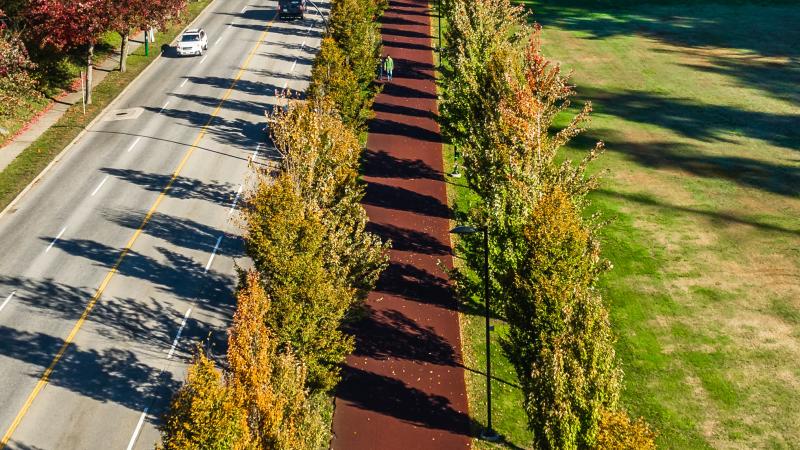
Every litre of rainwater absorbed by trees and the surrounding soil is water that does not have to be pumped or managed through City infrastructure. That reduces pressure on our drainage system, helps control flooding and saves money. Trees also filter air pollution and provide shade that can reduce the need for cooling during periods of extreme heat.
Jim Lorimer Park reflects Burnaby’s long-term commitment to park space
The cost of tree planting varies significantly depending on the site, the size and type of trees, site preparation, restoration work, establishment and ongoing maintenance. But without doubt this is an investment which pays off. According to our 2025 Urban Forest Strategy, Burnaby’s urban forest provides more than $8.1 million in environmental benefits each year.
The trees remove about 259 tonnes of air pollutants from the atmosphere each year, capture about 7,579 tonnes of carbon annually, and prevent about 818 million litres of rainwater runoff from entering the stormwater system.
The City estimates the value of those services at about $2.82 million for air-quality improvements, $1.81 million for annual carbon sequestration and $2.49 million for avoided stormwater runoff. The urban forest also stores around 225,749 tonnes of carbon, valued at nearly $54 million as a one-time stored-carbon value.
What are the main challenges facing us and what we are doing about it?
New housing, sidewalks, roads, utilities and public facilities all require space, and some existing trees will be lost as any city, ours included, continues to grow. But well-planned development can also help expand our canopy over time by funding and enabling the planting of many more trees that will grow and mature for future generations.
Replacing a mature tree takes time. Newly planted trees need decades to provide the same canopy, and a proportion will naturally be lost and need to be replaced as they establish.
That is why we are planting longer-lived, more resilient species, improving soil and growing conditions, and carefully considering where trees have the space and certainty to reach maturity. Local planning helps us make the best planting decisions we can, based on what we know about where future development and infrastructure are expected.
Private property is critical to Burnaby’s canopy, with average coverage of 18 per cent compared with 46 per cent on public land. Under the Burnaby Tree Bylaw, removing a protected tree requires a permit and replacement planting, with up to three replacement trees required depending on the size of the tree removed.
On development sites, trees greater than 20.3 centimetres in diameter are protected. If the required replacement trees cannot be accommodated on-site, the owner or developer must pay $1,500 per tree into the Civic Tree Reserve Fund so the City can plant trees elsewhere in Burnaby.
New fire station and wildfire prevention program strengthening Burnaby’s safety
Climate change adds another layer of difficulty. Heat, drought, extreme weather, pests and disease are putting greater stress on trees, particularly those growing with limited soil, water and root space. The City is responding with a wider variety of drought-tolerant and climate-adapted species.
Burnaby’s forests face other pressures too. More than 22,000 observations of invasive plants have been recorded, including Himalayan blackberry, English ivy, knotweed and English holly. Unauthorized trails and illegal dumping can also damage vegetation, compact soil and spread invasive plants. The City is mapping and monitoring infestations, removing invasive plants, taking steps to prevent their return, and restoring affected areas with dense native planting.
How successfully we control these pressures and reduce tree mortality will directly affect our ability to grow the canopy and reach our long-term goals.
Growth and a healthy urban forest do not have to be opposing goals. With careful, flexible, long-term planning and shared responsibility among the City, developers, property owners and residents, Burnaby can accommodate growth while building a healthier and more resilient urban forest.
PODCAST: Hollywood North, Burnaby’s film and television industry—with Mammoth Studios president Amy Lang