Following is a letter to Burnaby residents from Mayor Mike Hurley
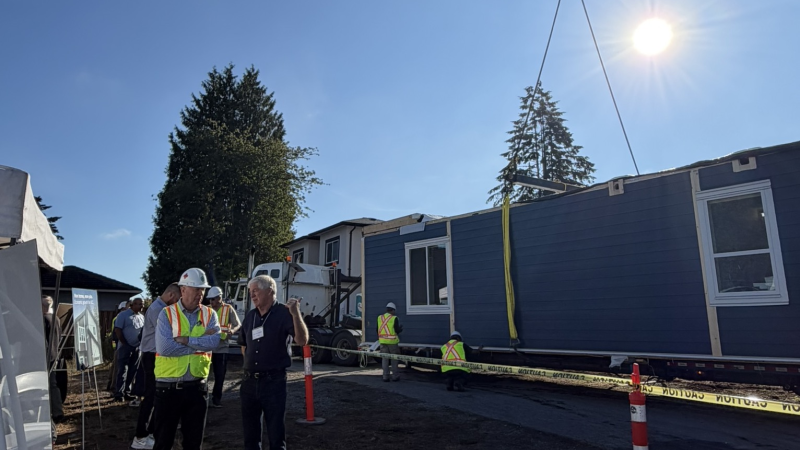
This week, factory-built housing modules were lifted into place at our modular housing pilot project in East Burnaby. Supported by Modular BC, the National Research Council and external pilot funding, the project will test whether modular construction can provide a faster and more efficient way to deliver some of the housing Burnaby needs.
Modular housing is not a silver bullet, but it is an example of the kind of innovation and most importantly, the collaboration that will be needed to address our housing challenges in the years ahead.
As Burnaby continues to grow, it is becoming increasingly clear that the current approach being taken is not working. Here are five realities that should redirect the housing conversation:
1. Local planning must be at the heart, with everyone playing their role
The Province's Bill 44 Small-Scale Multi-Unit Housing (SSMUH) requirements came into effect in Burnaby in 2024, requiring multi-unit housing to be permitted on lots previously zoned for single- and two-family homes.
This was not Burnaby's approach. Before the legislation was introduced, the City had already developed our own housing strategy, a 10-year plan that grew out of the Task Force on Community Housing, extensive public engagement with thousands of residents, and detailed analysis of our city’s housing needs.
The one-size-fits-all approach the Province has imposed is not working — it is having a deep impact on our communities and we are definitely not alone in raising these concerns. Local planning draws on local insight and input to ensure the right houses are being built, in the right places, for the right reasons.
How Burnaby is funding growth through the responsible use of reserves
Setting municipal housing targets makes no sense when it is not a municipality’s responsibility to build houses. Our responsibility as municipalities is planning and zoning, and we should be trusted to do so. Burnaby has added significant density over the years, around our four town centres. We should be a poster child for what can be achieved through local planning, not have those powers taken away from us.
Other orders of government have their own responsibilities to deliver on — like funding affordable housing, building hospitals, schools and major transportation infrastructure. These all impact housing and affordability.
But as we are asked to work toward broader provincial housing and growth objectives, municipalities cannot be expected to fund all the infrastructure needed to support that growth through the local tax base alone.
We do not need targets, we need all governments to meet their own responsibilities and work together. That is how we avoid the gaps and costly catchups of the past.
2. A one-size-fits-all approach increases costs which fall on residents
When zoning legislation allows additional density in neighbourhoods that cannot currently support it, and have no existing plans to do so, we see problems with school spaces, lack of transit, pressure on parks and other recreational spaces, access to shops, parking, high-speed internet, as well as water and waste services.
The cost of adding these services and resources then falls on the City, which comes back on taxpayers, or on developers, which means increased house prices and rents.
Three construction needs to support long-term growth
It also increases utility fees, reduces quality of life when communities are out of balance, and can drive up property values. Higher property values can also push up property taxes for residents and price out local businesses.
Burnaby's long-standing approach has been that growth should pay for growth, ensuring those benefiting from additional density contribute toward the infrastructure and amenities required to support it rather than shifting all the burden onto existing taxpayers.
Our City planners know where we can add capacity sustainably and understand the different housing needs of all the communities across our city.
3. Developers won't build in these conditions
So not only is the Province's approach making housing more expensive, it is discouraging developers who cannot absorb these additional costs without either making projects unviable or pushing prices and rents beyond what people can afford or are willing to pay.
Burnaby currently has approximately 25,000 approved housing units that have not yet proceeded to construction, and the City has no authority to compel developers to begin building or require units to be occupied.
Success of new funding will depend on local input and getting the details right
With nearly 4,000 vacant and unsold housing units already sitting across Metro Vancouver, the challenge is not simply approving more housing — it is ensuring we are enabling the kind of housing that is actually needed and can be successfully delivered.
This shows we do not simply have a housing supply problem. We have an affordability problem, and adding more approved housing is clearly not the fix on its own.
4. Affordability is the real crisis
Yes, the Province's approach is adding further costs to an already unaffordable housing system, but this crisis did not begin with Bill 44. Over recent years, it has become clear that left to the market, rents and prices have risen beyond what people earning average or below-average incomes can afford.
Short-term thinking risks long-term consequences for affordable housing in Burnaby
Affordable housing includes both below-market and non-market housing and requires coordinated action across all three orders of government. The federal government provides large-scale capital funding and financing tools. However, it is the provincial government's contributions — through major capital funding, operating subsidies and programs delivered by BC Housing — that form the backbone of actually getting projects built.
However, the latest BC Budget has reallocated nearly $1.4 billion in housing investments across its current three-year fiscal plan and indefinitely suspended the Community Housing Fund, the primary funding program that municipalities and non-profits have relied on to build affordable rental housing.
This means we are stopping the supply of affordable housing, leading to a more costly catch-up down the line. In the meantime, construction costs will rise and skilled workers will leave the sector, making it harder to meet the demand when building resumes.
All of this is unfolding amid one of the largest budget deficits British Columbians have faced, but budgeting and planning must extend well beyond political cycles to support the stable, predictable conditions our housing sector needs.
5. What we are doing and will continue to do
We continue to resist a one-size-fits-all approach and advocate for local planning to be at the heart of the housing solution. That means sitting down with all orders of government, non-profits and the construction sector and understanding the unique conditions of every community.
We successfully opposed Bill M 216, the 2025 Professional Reliance Act, which would have further limited local oversight in the development approval process. We also wrote to Premier Eby on behalf of 16 mayors, urging the Province to pause and reconsider their legislation. We have consistently raised these concerns with local MLAs, directly with the Province and publicly, and we will continue to increase the pressure.
Meanwhile, our own Burnaby housing authority is now underway with its first two approved projects, which will deliver 387 new rental homes across Burnaby – including 183 rental townhomes in partnership with Mosaic — to help meet the growing demand from families in our city.
Ultimately, we had to amend Burnaby's zoning bylaws to comply with the Province's Bill 44 requirements. However, our approach has been to meet those requirements while using the limited authority still available to reduce local impacts on our neighbourhoods.
So we approved changes to the R1 Zoning Bylaw to reduce the height and size of small-scale multi-unit housing projects. Those changes now mean that Burnaby's height regulations are one metre lower than the Province's guidelines of at least 11 metres for three-storey SSMUH zoning.
Burnaby has also reduced permitted lot coverage below the Province's recommended 60 per cent, requires larger front-yard setbacks, and increased parking requirements where the City has the authority to do so.
We are making sure Burnaby’s voice is heard as we work to put local planning back at the heart of the housing solution.
PODCAST: The businesses, culture and community that make Burnaby Heights so special—with the Heights Merchants Association