Following is a letter to Burnaby residents from Mayor Mike Hurley
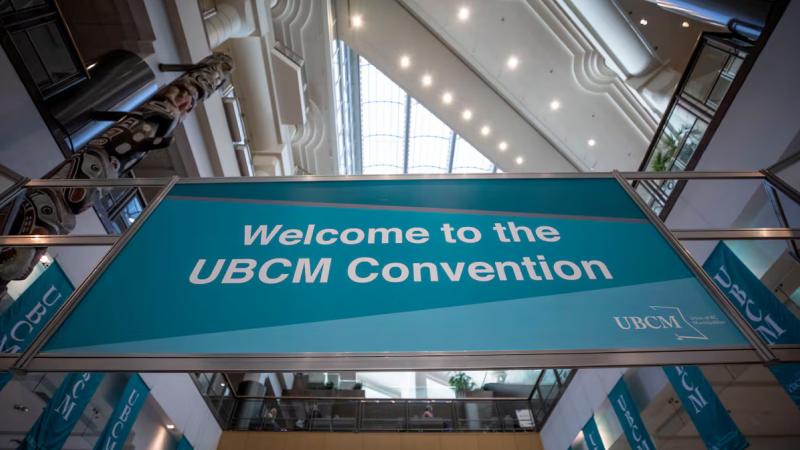
Burnaby joined local governments from across British Columbia last week at the UBCM convention, ensuring our city’s voice is being heard on the issues that matter most to our residents.
The Union of British Columbia Municipalities, or UBCM, brings local governments together to represent our shared interests and advocate to the Province on the issues affecting our communities. The annual convention is where local leaders, through policy sessions, workshops and resolution debates, discuss these common priorities and meet directly with provincial representatives.
For Burnaby, the convention was an important opportunity to reinforce the City’s position on three shared issues with significant implications for our community: protecting local decision-making, restoring reliable funding for affordable housing, and securing stable, long-term funding for wildfire prevention and preparedness.
Effective housing policy starts with local planning
During a panel discussion exploring how local governments can use modern construction methods like modular housing to support housing affordability, it was important to emphasize that innovation must be matched by sound housing policy. Yes, new construction methods might be able to provide a faster and more efficient way to deliver some of the housing Burnaby needs, but they are not a substitute for effective local planning.
Five realities that should redirect the housing conversation in Burnaby
Burnaby continues to raise serious concerns about Bill 44 and the Province’s one-size-fits-all approach to housing. These concerns are shared by communities across British Columbia, and I have already written to Premier Eby on behalf of 16 mayors, urging the Province to pause and reconsider the legislation.
The legislation requires multi-unit housing to be permitted on lots previously zoned for single- and two-family homes, regardless of the different needs and circumstances of individual neighbourhoods.
Before Bill 44 was introduced, Burnaby had already developed a 10-year housing strategy based on extensive public engagement and a detailed assessment of the city’s housing needs. Burnaby has also accommodated considerable growth around its four town centres, where new housing was planned alongside transit, schools, parks, community facilities and essential infrastructure. This demonstrates what can be achieved when growth is guided by local knowledge and careful planning.
It was important then to take the opportunity last week to emphasize once again, that allowing additional density in neighbourhoods that are not equipped to support it can place greater pressure on schools, transit, parks, roads, water and waste services.
The cost of providing that infrastructure ultimately falls on taxpayers or is passed through development costs into higher home prices and rents. These added costs can also make projects unviable, discouraging developers from building at all.
Affordable housing needs stable funding
A major resolution at UBCM called on the Province to reinstate the Community Housing Fund (CHF) which is essential to affordable housing. In Budget 2026, The Province reallocated nearly $1.4 billion in housing investments across its current three‑year fiscal plan and indefinitely suspended the CHF, the primary funding program that municipalities and non‑profits have relied on to build affordable rental housing.
Over recent years, it has become clear that left to the market, rents and prices have risen beyond what people earning average or below-average incomes can afford. We do not have a housing crisis; we have an affordability crisis.
And affordable housing, which includes both below-market and non-market housing, requires coordinated action across all three orders of government. But it is the Province's contributions — through major capital funding, operating subsidies and programs delivered by BC Housing — that form the backbone of actually getting these crucial projects built.
Burnaby already has approximately 25,000 approved housing units that have not proceeded to construction, and the City has no power to compel developers to build them or ensure they are occupied. Across Metro Vancouver, nearly 4,000 completed homes remain vacant and unsold. These figures point to a deeper problem than simply approving more housing: we need to ensure we are delivering the kind of housing that is actually needed and can be successfully delivered. That is largely, affordable housing.
Short-term thinking risks long-term consequences for affordable housing in Burnaby
The Province is facing difficult financial choices, but affordable housing cannot be planned around short-term budget cycles. It requires stable, predictable funding that allows municipalities, non-profit housing providers and the construction sector to plan with confidence.
Pausing affordable housing funding does not pause the need for affordable homes. It only creates a more expensive catch-up later. Demand and construction costs will continue to rise, while non-profit providers will find it harder to retain staff. With fewer projects moving forward, skilled tradespeople may leave the housing sector for more reliable work, reducing the workforce available when construction resumes. When funding returns, communities end up paying more and waiting longer to deliver the same housing projects.
Wildfire preparedness cannot be reactionary
UBCM delegates also endorsed a call for stable, predictable and long-term funding for the FireSmart Community Funding and Supports program. This enables local governments and First Nations to plan for wildfire risk, educate residents, assess properties and critical infrastructure and undertake work to make communities more resilient. After 30 years as a firefighter, let me tell you that there is no substitute for being prepared.
Staying ahead of wildfire risk: how Burnaby is preparing and what residents need to know
Earlier this year, dwindling funds forced the program to shift from an open intake to a competitive process. The Province provided additional funding for 2026 and has since committed $15 million for the 2027 intake, but communities need certainty beyond a single funding cycle.
Wildfire preparedness is not something cities can turn on and off from year to year. It requires long-term planning, trained staff, public education and sustained work to reduce risks and protect critical infrastructure. Without predictable funding, municipalities cannot build or maintain that capacity.
Burnaby has not experienced wildfires on the scale seen elsewhere in BC, but hotter, drier summers are increasing the risk. The City’s new wildfire-detection system demonstrates what early investment in preparedness can achieve. Using 45 ground sensors and six smoke-detection cameras, it can identify potential fires in near real time and alert emergency personnel before they spread.
Ultimately, the same principles connect these three issues raised at UBCM: respecting local decision-making, providing stable funding for long-term priorities and planning ahead to give communities the certainty they need to manage growth, build affordable housing and prepare for emergencies.
PODCAST: Reflecting on 24 years serving Burnaby — with Councillor Sav Dhaliwal