Following is a letter to Burnaby residents from Burnaby resident Mark Angelo. Mark is the the founder and chair of World Rivers Day and chair emeritus of the Rivers Institute at BCIT.
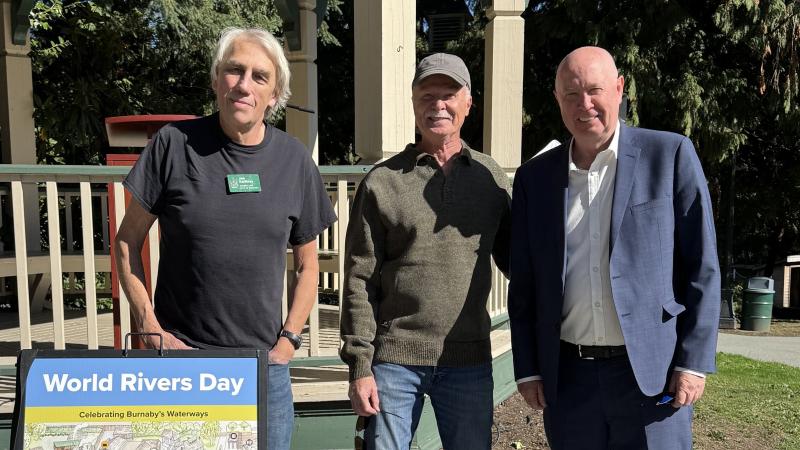
Burnaby is proof that a growing urban city can protect and improve its waterways at the same time.
Around the world, many cities have lost the creeks and streams that once flowed through them. As communities grew, waterways were culverted, paved over and forgotten. Burnaby chose a different path. Thanks in part to its long-standing Open Watercourse Policy, roughly 70 per cent of the streams that existed here 125 years ago still exist today.
I believe Burnaby, the very first local government to proclaim Rivers Day, can be a shining example of how growth and environmental stewardship can go hand in hand.
As populations grow and living spaces become smaller, streams and access to nature become more important than ever to the quality of life people enjoy. Few cities can point to the natural assets Burnaby has, from the Fraser River and Brunette River to Deer Lake, Burnaby Lake, Burnaby Mountain and an incredible network of approximately 90 waterways that flow throughout our city.
My connection to Burnaby goes back more than five decades. I came to BCIT in the early 1970s to help establish its new Fish and Wildlife Program, eventually spending my career teaching there and working alongside generations of students. Today, I remain connected to the institution as a Faculty Emeritus and was deeply honoured to have recently received an honorary doctorate from BCIT.
Long before Rivers Day existed, I had a simple idea. Ever since I was a boy, there was something about moving water that captivated me. I loved exploring creeks and streams, turning over rocks, looking for insects and discovering the incredible abundance of life they supported.
Later, as a teenager, I completed a four-day rafting trip down Montana's Blackfoot River. By the end of that journey, I knew I wanted to spend my life trying to protect rivers.
After coming to British Columbia, which I often visited in my childhood, I found myself constantly thinking about how fortunate we are to live in a place defined by great rivers. I remember thinking: wouldn't it be wonderful if we had a day that celebrated the beauty and values of our rivers and the importance of looking after them? That simple idea ultimately became Rivers Day, which we first celebrated in 1980 in concert with my friends at the Outdoor Recreation Council.
Many of our earliest Rivers Day celebrations took place right here in Burnaby at Fraser Foreshore Park. We organized those events in partnership with the City, and BCIT and our intent was to celebrate the many natural, cultural and recreational values of our waterways. In addition, we hoped to increase awareness about the pressures they face and the need to protect and restore them.
Just as importantly, we wanted people to connect with local waterways. When people learn about their local stream or river, there is a greater chance they’ll become attached to it and ultimately help to protect it.
Throughout the 1980s, the popularity of Rivers Day took off across British Columbia, with celebrations unfolding in communities throughout the province. Then a bigger possibility emerged.
When the United Nations launched its Water for Life Decade initiative in 2005, I remember thinking that the idea of a World Rivers Day would be a natural fit. If Rivers Day could inspire people across British Columbia, perhaps it could inspire people elsewhere as well. Getting from that idea to reality though was not easy.
We spent many months approaching UN agencies, governments and organizations around the world. Slowly, the idea worked its way up the ladder. Eventually, we received the UN and global support we were seeking.
I was thrilled when we got the green light. Then came another realization — now the hard work started. We still needed people, organizations and communities around the world to come on board. It was a daunting task at first but over time, more and more embraced the idea. One country became several. Several became dozens.
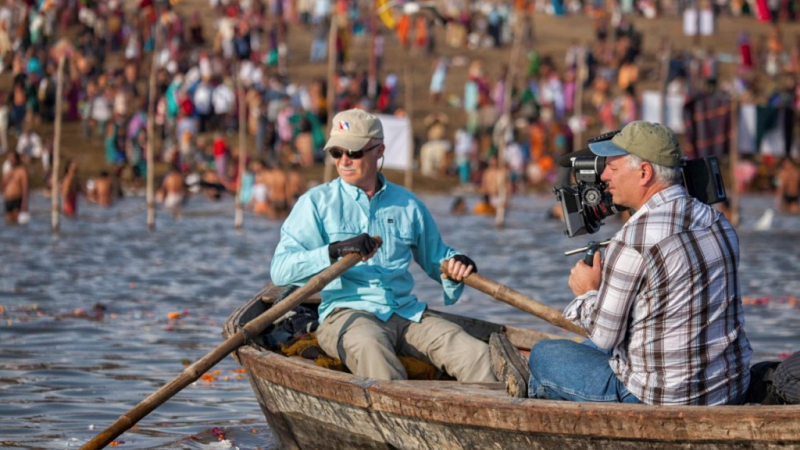
Today, World Rivers Day involves more than 100 countries, thousands of events and millions of participants. Along the River Thames in England, World Rivers Day has grown into a festival that stretches for weeks. Nigeria hosts major celebrations involving entire communities. The Bangladesh River Foundation organizes large-scale events and symposiums.
Around the world, schools participate through art projects, essays and educational programs. Communities organize cleanups, habitat restoration projects and paddling events. Even European river cruise companies now celebrate World Rivers Day with onboard programming for passengers.
What makes me especially proud is that the roots of that global celebration can be traced right back to British Columbia, the Fraser watershed, BCIT and the city of Burnaby.
In fact, the announcement establishing World Rivers Day took place at BCIT in Burnaby. Many who spoke at that event highlighted the need not only to protect rivers that remain in a healthy state, but also the importance of restoring those that have been damaged in the past.
Regarding the latter, few places better demonstrate what is possible than Guichon Creek. When I first arrived at BCIT, Guichon Creek ran through part of the campus. On my first day there, I remember being disappointed by what I saw. The creek was polluted, badly damaged and stripped of streamside vegetation.
Then, on my second day, I met an elderly gentleman who had lived beside the creek for most of his life. He told me stories about the creek he had known as a child. He spoke about salmon, trout, otters, eagles and the abundance of life that once existed there. Listening to him, I remember thinking: wouldn't it be neat if we could bring the creek back to what it once was?
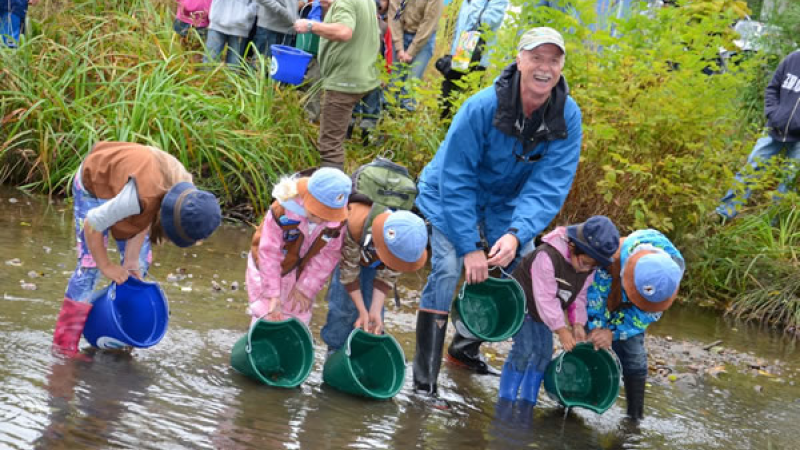
Students, staff, volunteers, BCIT, the City of Burnaby and many others set out to do exactly that. Over the years, tons of garbage and debris were removed. Pollution issues were addressed. Thousands of trees and shrubs were planted. Fish passage barriers were corrected. A new fishway at Cariboo Dam, improvements to culverts and more recent restoration work all helped reconnect the creek system.
Slowly but surely, the creek came back to life. Last fall, salmon returned to spawn throughout the watershed and made their way all the way onto BCIT property. For me, Guichon Creek epitomizes the fact that nature can heal itself if only we give it a chance. It is also a powerful example of what can happen when a community commits itself to restoring and reconnecting nature.
Taking long-term action for a healthier, more resilient urban forest in Burnaby
That is one reason I am so pleased to see a new World Rivers Day commemorative display recognizing Burnaby's contribution to Rivers Day being installed at Fraser Foreshore Park next month. There could hardly be a more appropriate location.
The Fraser River is one of the great rivers of the planet. The Fraser foreshore, together with Burnaby Lake, Deer Lake, the Brunette River and our many creeks and streams, tells the story of how important waterways have been to both Indigenous and non-Indigenous communities throughout Burnaby's history.
The sign recognizes Burnaby's role in a global movement, but it should also remind us of the responsibility we all share moving forward. As Burnaby continues to grow, I hope we continue protecting the waterways we still have while looking for opportunities to restore, reclaim and rewild those that were damaged in the past.
I also want to acknowledge Burnaby's streamkeepers and community volunteers. Fifty years ago, there were very few stream stewardship groups in British Columbia. Today, Burnaby is fortunate to have one of the strongest streamkeeper networks anywhere.
When I visit other cities, I often see waterways that have been buried, paved over and lost. Burnaby chose a different path.
If we continue on that path, protecting parks, restoring streams, improving fish passage and reconnecting habitats, Burnaby can continue leading the way and remain a shining example of how cities and nature can thrive together.
PODCAST: Reflecting on 24 years serving Burnaby—with Councillor Sav Dhaliwal