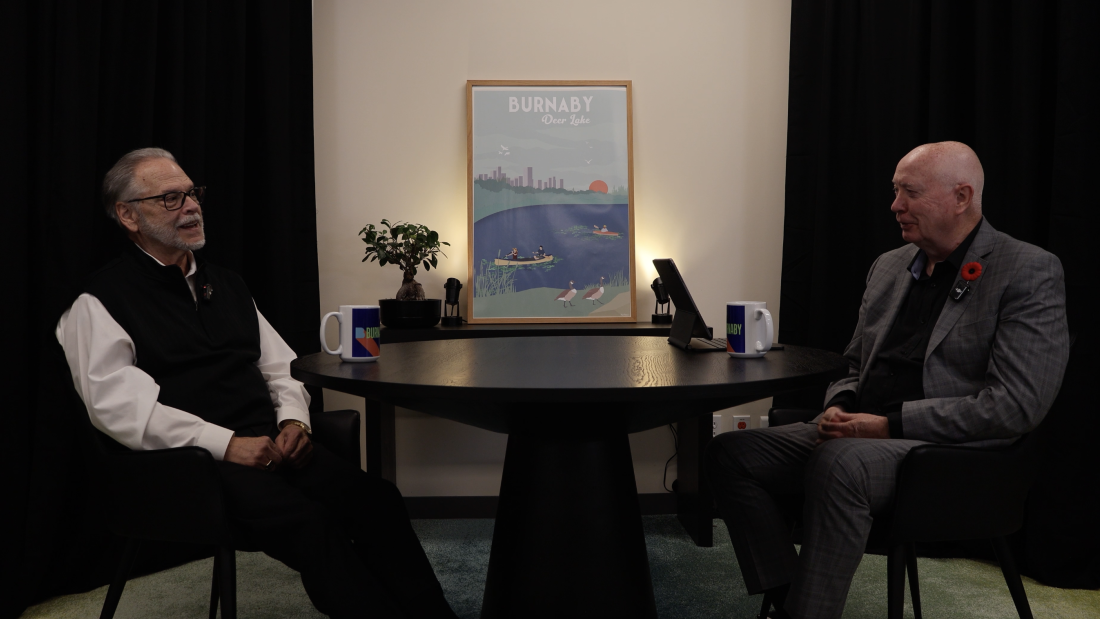
Following is a letter to Burnaby residents from Mayor Mike Hurley
Communities across the country are facing challenges that began and extend far beyond our boundaries. Meeting them requires strong partnerships, and when it comes to the relationship between Burnaby and the new provincial government that is essential.
Strong partners find common ground and work towards shared goals. They may not agree on everything, but they sit down together, understand what each can contribute and find practical ways to achieve far more than either could alone. That approach ensures public resources are used as efficiently as possible to deliver the greatest benefit for residents. Which ultimately means the most effective results with the least impact on taxes.
Municipalities are engaging on the ground every day in our communities, we have the local insights necessary to make effective decisions about how our communities grow, where new housing, businesses and jobs can best meet local needs, and align with the delivery and maintenance of roads, water and sewer systems, fire protection, parks, recreation facilities and other public infrastructure.
The Province ensures that hospitals and other health-care facilities and services, along with schools and child care, keep pace with this planned growth. With the support of the federal government, it is also responsible for delivering housing and transit at the scale needed to address affordability, connect people with jobs and services, and support these growing communities.
Their job is to do this right across British Columbia, balancing all the different priorities and making difficult choices about how limited resources are used. That is no easy task, and the incoming Conservative government will have our full support and collaboration in getting to work.
So a big congratulations to premier-designate Lorne Doerkson on his election victory. We look forward to working with you and the incoming government to advance our shared priorities. The clear pride you take in representing Cariboo-Chilcotin means you will understand the same determination we bring to ensuring the needs and views of Burnaby residents are heard over the next four years.
We already see important areas of alignment that can form the basis of a strong and productive partnership. This article provides an overview of three of them, with each to be explored in more detail over the coming weeks and discussed directly with the incoming premier and government.
Boosting the BC economy
The incoming Conservative government made boosting British Columbia’s economy, attracting investment and creating good jobs a central part of its campaign. That work is particularly timely, and Burnaby has an important role to play in it.
Record voter numbers as Burnaby chooses to continue with stable, thoughtful growth
Burnaby is a growing innovation hub at the heart of the Lower Mainland and our success is inseparable from the success of the wider region. Our life-sciences and technology sectors are expanding quickly, while established industries such as film, digital media and advanced manufacturing remain major contributors to our economy and now the province’s.
Together, they create thousands of skilled jobs, develop products and expertise for international markets, attract investment from across Canada and around the world, and are a vital connection for the people, goods and services moving through the region every day.
The Mayor’s Task Force on Burnaby Economic Growth and Resilience has already provided practical recommendations to accelerate economic growth, strengthen competitiveness and support local businesses, investment and job creation.
That gives Burnaby a clear plan and a strong basis for working with the incoming provincial government to turn our city’s economic potential into wider benefits for the region and province.
Keeping people safe and healthy
Public safety was another major focus for the incoming Conservative government during their election campaign. Burnaby is already one of the safest cities in British Columbia, but like many communities across the province, some of the greatest dangers we face come from the threat of wildfires and other emergencies caused by extreme weather that can put residents, homes and critical infrastructure at risk.
The incoming government has committed to creating a dedicated fund for wildfire early-detection and prevention technology, and let me tell you after 30 years as a firefighter: in an emergency, preparedness is everything.
The FireSmart Community Funding and Supports program provides provincial funding to local governments, and is one of the most important tools we have to ensure our communities are prepared for wildfires.
However, funding is currently confirmed one year at a time rather than the stable, predictable and long-term funding needed to retain trained staff, plan ahead and carry out the sustained work needed to reduce wildfire risks. A new technology fund will help, but wildfire preparedness in BC depends on long-term funding for FireSmart.
The greatest concern for the health of Burnaby residents, however, remains the future of Burnaby Hospital. The hospital was built in 1952 for a city of 58,000 people. Today, it serves more than 500,000 people across Burnaby and East Vancouver. In 2019, the Province described its redevelopment as the priority health-care project in British Columbia. The need has only grown since then.
The incoming government will face many calls for funding, with every community understandably making the case for its own needs. The figures, however, show just how urgent the situation is in Burnaby. While BC averages 1.46 acute-care beds for every 1,000 residents, Burnaby has only 0.58, and that is projected to fall to 0.41 by 2032. By comparison, Vancouver has 2.9 beds per 1,000 residents and Surrey has 1.0.
The outgoing government’s recent commitment of $210 million to complete the remaining work from Phase 1 brought the redevelopment back to life after their earlier "re-pacing", but Burnaby needs the all-important Phase 2 put firmly back on track if we are truly serious about keeping Burnaby residents safe and healthy.
This means setting aside and earmarking the full $1.8 billion in approved capital funding, providing a clear timeline and delivering Phase 2 as originally approved, with no reduction in scope or planned beds.
Housing and local decision-making
In Burnaby, we were very happy to hear premier-designate Lorne Doerkson speak about the need to return housing and land-use decisions to local governments.
Burnaby has led the opposition to the one-size-fits-all housing and zoning legislation that resulted in large multiplex homes being built across our city in the absence of local planning. We now look forward to working with the new government to ensure its review addresses the full package of imposed legislation by their predecessors.
Ultimately, Bill 44 took a one-size-fits-all approach that failed to account for differences in local housing needs and demand across the entire province, the capacity of existing infrastructure and the cost of expanding it to support significant new density. But repealing Bill 44 alone will not be enough.
Five realities that should redirect the housing conversation in Burnaby
For example, Bill 47 sets the rules for Transit-Oriented Areas, which require Burnaby to permit buildings of between eight and 20 storeys around SkyTrain stations.
We also need to restore Burnaby’s ability to use our Community Benefit Bonus program, which for many years successfully allowed additional development in voluntary exchange for contributions towards the local facilities and infrastructure that growth required.
It had given the City the flexibility to add significant density and support the additional needs of the community, all while remaining debt-free and keeping the burden off our taxpayers.
It is our aim in Burnaby to allow density where new housing is needed, where it can be supported by infrastructure and public services, and where projects are attractive and financially sustainable for builders.
New development creates considerable value. A fair share of that value should support the roads, sewers, fire protection, parks, recreation facilities and other infrastructure needed to make that growth possible and sustain it over the long term.
For any approach to deliver the truly affordable housing needed, provincial and federal funding programs need to be reopened and expanded. Transit also needs sustained investment to support the additional density. Without it, the pressure shifts onto municipal services and therefore local taxpayers.
Simply removing the one-size fits-all approach, however, is a practical first step. Burnaby now has approximately 25,000 approved units that have not proceeded to construction, while more than 14,000 newly completed condominiums remain unsold across Metro Vancouver.
It is clear that simply approving more units has only created theoretical capacity, in places where developers are often not interested in building because of a lack of demand, or where the infrastructure costs required makes projects too expensive for them to sell.
Housing is a great example of where early cooperation can make a huge difference.
We look forward to welcoming Burnaby’s new MLAs once the final count is complete next week. They will be sworn in later this month, followed by premier-designate Lorne Doerkson and his new Cabinet.
Burnaby will be ready to work with all of them from the outset and look forward to bringing these priorities, and the voices of our residents, to the table in the spirit of strong partnership.
PODCAST: Looking back on more than 50 years working at Burnaby City Hall—with Chad Turpin