Following is a letter to Burnaby residents from Mayor Mike Hurley.
This is the second in a series looking at three areas of alignment where Burnaby and the new provincial government can work together to build a strong and productive partnership. This week, we are looking at how we keep our residents safe and secure. In Burnaby that centres upon investing in wildfire preparedness and the development of a plan to tackle homelessness.
It has been encouraging to hear the incoming provincial government placing such an early focus on public safety, and particularly wildfire prevention.
Premier-designate Lorne Doerkson represents Cariboo-Chilcotin, a region that has endured repeated and destructive wildfire seasons. He has spoken about his own experience during the devastating 2017 wildfire season, when Williams Lake was evacuated and he was among thousands forced from their homes across the Cariboo, as well as the 2021 Flat Lake fire, which burned almost 74,000 hectares southwest of 100 Mile House.
At the time, he called for BC to learn from that wildfire season, so communities would be better prepared to respond to future fires. That is something we can certainly agree on.
After 30 years serving Burnaby as a firefighter, including roles as president of both the Burnaby Fire Fighters Association and the BC Professional Fire Fighters Association, it is clear to me that nothing is more important when it comes to protecting a community than preparedness.
1 Investing in wildfire preparedness
During the provincial election, the BC Conservatives committed to a Wildfire Innovation Fund, providing $25 million a year over four years to support BC companies developing and deploying new wildfire technology. They also committed $400 million to expand the Province’s firefighting aircraft fleet.
Together, these commitments recognize the importance of investing in the latest facilities and equipment, as well as in the innovation needed to try and keep pace with a growing and changing wildfire threat.
Burnaby has not experienced wildfires on the scale seen elsewhere in BC, but hotter, drier summers are increasing the risk here too. And as a result, our own approach has reflected those same priorities.
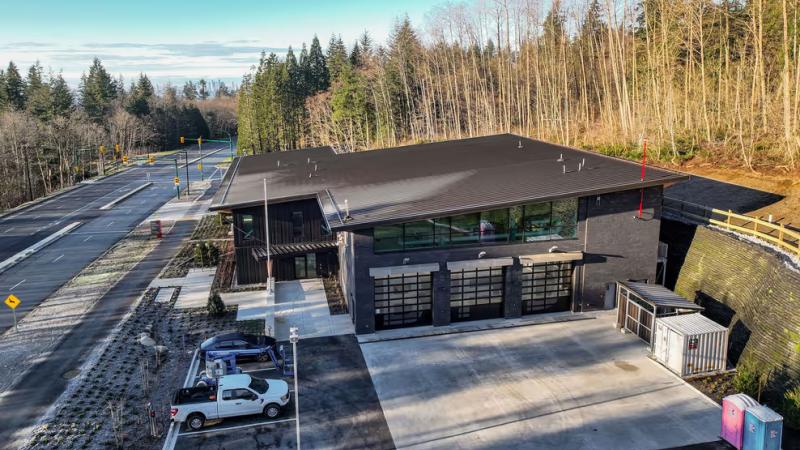
Last year, we opened Fire Station 8, the first permanent fire station on Burnaby Mountain where more than 6,000 Burnaby residents now live at UniverCity, alongside thousands of students living and studying at SFU. That growth has transformed the mountain into a busy residential and university community surrounded by steep, forested slopes and close to critical infrastructure.
Fire Station 8 was designed for the unique needs of Burnaby Mountain. It is a purpose-built facility spanning about 15,000 square feet, with three drive-through apparatus bays sized for the latest emergency vehicles and specialized wildfire equipment tailored to the forested environment.
Building that level of preparedness requires significant investment. Building Fire Station 8 was only possible thanks to SFU providing the land at no cost, while the federal government agreed to cover over half of the eligible costs, up to $30 million. But this facility must also be maintained, updated and added to as our City continues to grow.
Along with investing in state-of-the-art facilities and equipment, Burnaby is also investing in new, innovative technology. Our autonomous wildfire-detection system is already showing the real benefits and potential of that innovation, and again it is dependent on a strong partnership with the great minds at SFU.
This system uses 45 ground sensors and six cameras to detect heat and smoke and alert firefighters in near real time. Since May 2026, it has flagged more than 125 potential incidents, including a recent wildland fire in Anmore that was detected before local authorities were notified. It also provided the first alert for two spot fires near the base of Grouse Mountain, helping crews find and suppress them before they could spread.
The reality is that we have found ways to make ends meet and deliver projects like these, but if we are serious about the growing wildfire threat in BC, local governments need a more sustainable way to fund and expand this work.
The FireSmart program is supposed to be the main source of wildfire-prevention funding available to local governments, but its remaining funds have dwindled, and its one-year funding cycle does not allow communities to plan for the long term.
Wildfire prevention cannot be turned on and off depending on the funding available in a particular year. That uncertainty makes it difficult to retain trained staff, plan work over several years and maintain the measures already in place.
Staying ahead of wildfire risk: how Burnaby is preparing and what residents need to know
At the 2026 Union of BC Municipalities convention, local governments across BC called on the outgoing provincial government to provide stable, predictable and long-term FireSmart funding.
The Premier-designate will face many difficult decisions and competing priorities as he takes office, but we are hopeful that his firsthand experience will prompt a review of this program, with the goal of providing local governments with the level of funding and reliable, long-term support needed to realistically prepare for and prevent wildfires in our communities.
2 Developing a plan for tackling homelessness
Burnaby is one of the safest cities in BC, but that does not mean our residents do not have their concerns. Going door to door during the recent local election campaign, speaking with so many residents, those concerns ranged from wildfires to cybercrime.
But one of the issues that came up most often was around homelessness. People have passionate feelings about this issue because it touches on two things that matter deeply to all of us: our humanity and public safety.
Four realities every Burnaby resident should understand about homelessness
There has been plenty of discussion about the different approaches the incoming provincial government might take, but what our community has needed for a very long time is a practical provincial plan to address homelessness. That is the starting point.
To suggest that homelessness in our city, and the problems associated with it, can be solved overnight is neither realistic nor reflective of the complex legal, practical and human challenges involved. So this plan needs to reflect the realities on the ground and clearly set out how each partner will contribute.
This should include how the $11.2 billion announced in the recent federal budget to build supportive and transitional housing, health infrastructure and provide other homelessness supports across Canada, can and will be used in BC.
Local governments should be part of that work. Our outreach teams in Burnaby have assisted at hundreds of encampments across the city, engaged directly with our communities and seen firsthand the stress and confusion that mixed messages can cause.
Without a coordinated plan, we have been left to fill gaps without being in a position to even begin to solve the broader problem. Tackling homelessness is not the responsibility of local governments, it is the Province who funds shelters and supportive housing through BC Housing and provides mental-health and addiction services through the health-care system.
But the incoming premier and his government will find Burnaby to be a supportive partner, with valuable experience and knowledge to contribute, and a shared commitment to keeping all of our residents safe and secure. We look forward to raising these priorities directly with them.
PODCAST: One year from Burnaby’s formal apology for historic discrimination against people of Chinese descent