
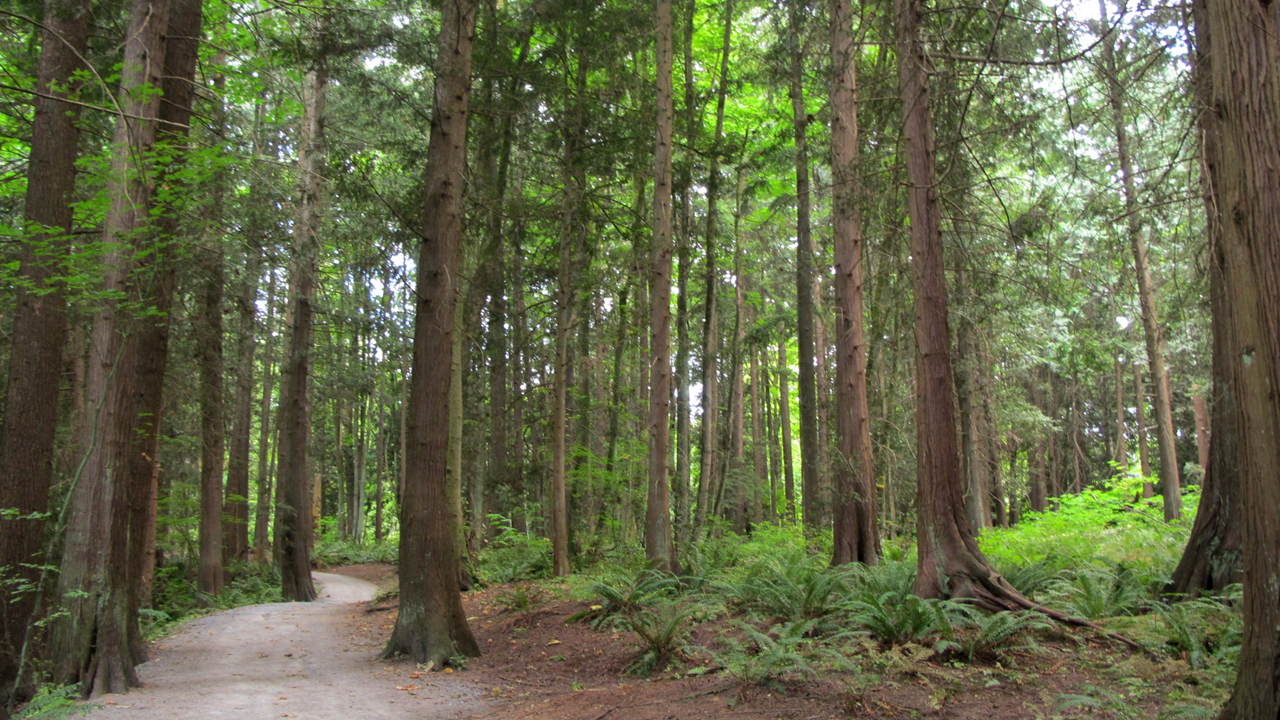
Ecosystem Restoration at Robert Burnaby Park
About this project
Robert Burnaby Park is a vital part of our city’s urban forest. Many creeks and streams run through the park and over half of its area is critical wildlife habitat. To make sure this sensitive ecosystem is protected and climate-resilient for generations to come, we’re taking on an environmental restoration of the park. This fall, we’ll be removing invasive species and planting 3,000 new trees. During this work, some trails and areas of the park may be closed. Thank you for your patience and for respecting restoration fencing while we work to protect this natural treasure for generations to come.
This project was carried out with funding from Growing Canada’s Community Canopies, an initiative financed by the Government of Canada and administered by the Federation of Canadian Municipalities. Notwithstanding this support, the views expressed on this page are the views of the City of Burnaby, and the Federation of Canadian Municipalities and the Government of Canada accept no responsibility for them.

Why restoration is needed
A healthy forest has a mix of trees at different ages, heights, and species. As Robert Burnaby’s mature trees age and approach the end of their lifespan, we’re ensuring there is a ‘next generation’ of diverse trees native to the local ecosystem to be tomorrow’s tree canopy. The health and diversity of the plants under the tree canopy are important to the overall health of the forest too and by replacing the invasive species from the ground cover plants, we’re protecting the important habitats for the fish, animals, birds and other life that the park is home to.
To find out more about the urban forest and how the City is protecting Burnaby’s tree canopy, you can read our Urban Forest Strategy.
What's happening now?
We’ve done an environmental survey of the park and identified sites for restoration, with 6 being completed this fall. Our team is currently assessing each site for hazard trees and mitigating the risk, preparing the sites by removing invasive plant species, conducting soil aeration and mulching and installing a combination of permanent and semi-permanent fencing to protect the planting areas. Restoration planting will begin in October.
