Following is a letter to Burnaby residents from Mayor Mike Hurley
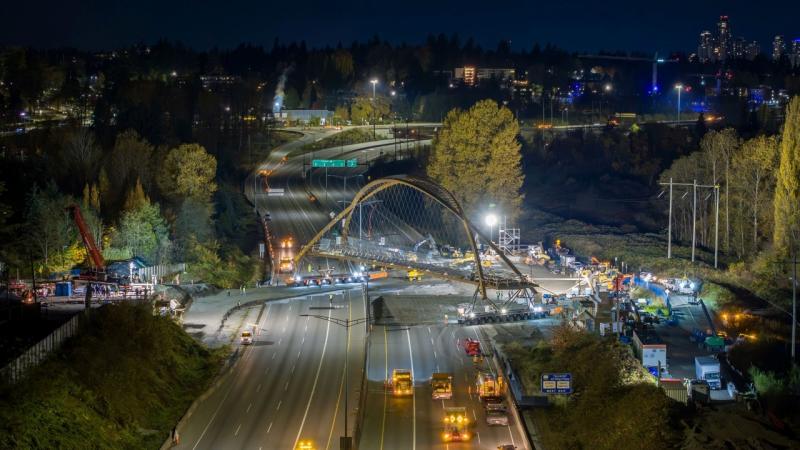
The overnight lifting of the Burnaby Lake Overpass across Highway 1 last November was one of the city’s highlights of 2025. We are delighted to announce that as of Monday, April 27 the new overpass will officially be open to the public.
In the early hours of November 9, a fully assembled, 400-tonne bridge was lifted into place, with two computer-controlled platforms swinging the massive structure 90 degrees to its new home spanning the highway.
Built from durable Canadian weathered steel designed for long-term outdoor use, the overpass rises 5.7 metres above the highway and is an incredible engineering feat standing as a powerful example of the planning, collaboration and ambition shaping Burnaby’s future.
It was amazing to see the excitement it generated, with so many residents out watching, some staying until 5am. This is Burnaby’s first ever pedestrian and cyclist-only overpass across a major highway. Crossings of major freeways like Highway 1 are rare in British Columbia and of this scale even in Canada.
The southern landing is at the intersection of Claude Avenue and McCarthy Court, while the northern landing is located at the trailhead at Glencarin Drive.
A safe crossing
The most important outcome of this massive project is public safety. For many years, pedestrians and cyclists moving north–south through Burnaby–including families–were pushed toward the Kensington crossing, one of the most dangerous points along the freeway.
It is a fast-moving, complex intersection with multiple lanes and ramps, and not a place where I would feel comfortable letting my own kids cross. This overpass changes that reality by providing a safe, direct alternative.
Safety was built into the project from the ground up. Best practice design principles were applied throughout, with careful attention to sightlines, lighting, and openness to create a space that feels safe and welcoming.
At night, lighting integrated into the handrails clearly defines the route without spilling light onto the highway below. Additional features, such as secure hanger cables and netting, add protection while maintaining visibility and comfort.
As outlined in Burnaby’s Transportation Plan, adopted by Council in 2021, the new overpass supports the target of reducing traffic fatalities and serious injuries by 100 per cent.
Keeping our city connected
Burnaby sits at the heart of the Lower Mainland, connected by major roads, SkyTrain, bus routes and regional cycling corridors. This overpass fills a long-standing gap in that role. For decades, Highway 1 has cut through the city as a physical barrier, limiting how people move across it.
The Burnaby Lake Overpass helps connect Burnaby by providing a safe, direct north–south link between Burnaby Lake and Deer Lake, while also unlocking east–west travel through the trail and neighbourhood networks on either side of the highway.
The project aligns with the City’s target for three quarters of all trips to be made by public transit and active transportation, and supports climate goals to reduce vehicle emissions to zero.
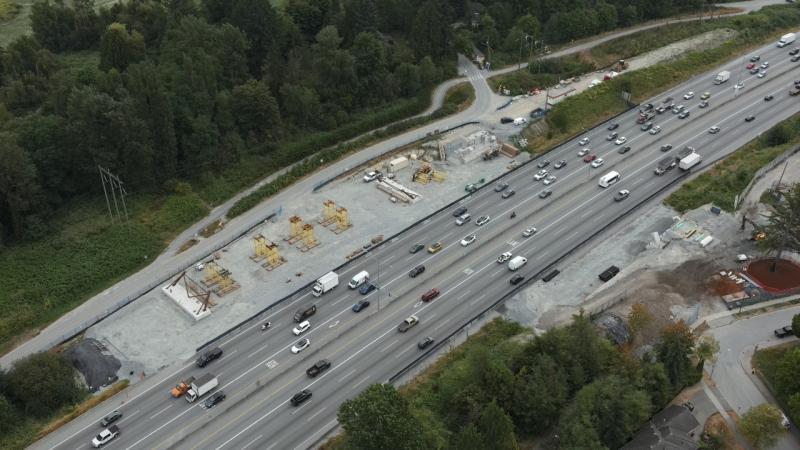
This investment also benefits people who continue to drive or rely on transit. By removing pedestrians and cyclists from complex crossings like Kensington, the overpass eases pressure and helps traffic move more smoothly and reliably. At the same time, short walking and cycling trips that no longer require a bus or car do the same for transit.
Safe, reliable connections help people reach jobs, schools, parks and local businesses more easily, make the city more attractive to employers and visitors and support strong commercial areas on both sides of the highway.
Active living and accessibility
The new overpass connects Burnaby Lake and Deer Lake–two of the city’s most iconic natural areas. Promoting active living is central to how we plan and grow as a city, and ultimately this overpass makes it easier for many more people to walk, cycle and get to their favourite parks, trails and amenities.
As people become familiar with the overpass and the new access it provides, its value will continue to grow. It opens up easier, safer connections to our growing facilities–such as the new Olympic-sized swimming pool under construction at Burnaby Lake.
Accessibility was a key consideration throughout the project. By using the naturally higher ground on both sides of Highway 1, the overpass is nearly flat and avoids long or steep approach ramps. Trails and connections were designed with gentle slopes, making the crossing easier and safer for people using wheelchairs, walkers, strollers and bicycles, or for anyone who finds hills challenging.
A city that offers safe, attractive and accessible outdoor spaces is better positioned to support economic growth, attract and retain businesses. The Burnaby Lake Overpass reinforces Burnaby’s identity as a city that values active, outdoor living while building the connections needed for a healthy, vibrant future.
Listening to our residents
Planning for the overpass began in 2019, with four possible locations initially considered. Each option was assessed based on whether a public right-of-way was available and how well it could connect to existing roads and trail networks.
After extensive engineering analysis, along with public consultation conducted both in person and online in spring 2022, the City selected this design for its geotechnical safety, based on naturally stable ground conditions, its low environmental impact, and its cost effectiveness.
Historic investment to be the beating heart of Burnaby
Construction began in fall 2023 and was delivered by the BC company Jacob Brothers, funded by the City of Burnaby’s Community Benefit Bonus Reserve Fund, with additional grant funding through the federal and provincial government’s Investing in Canada Infrastructure Program and TransLink.
The Community Benefit Bonus reserve fund is held specifically for capital projects delivering community facilities, parks, affordable housing and other public amenities. It is separate from the City’s day-to-day operating budget, and like other reserves it cannot be used for routine services or to lower taxes.
Using these funds for the Burnaby Lake Overpass is exactly what they are meant for, and because the money was already set aside, the project did not require a tax increase upon residents or to take funding away from other City services.
Thank you to the engineers, crews, and planners who made this remarkable project possible, and to the residents whose feedback continues to shape Burnaby’s future. We’re excited to see people walking, running, cycling and rolling across the Burnaby Lake Overpass very soon–and for years to come.
Supporting women and children fleeing violence in Burnaby–with Dixon Transition Society's Monika Verma