Following is a letter to Burnaby residents from Mayor Mike Hurley
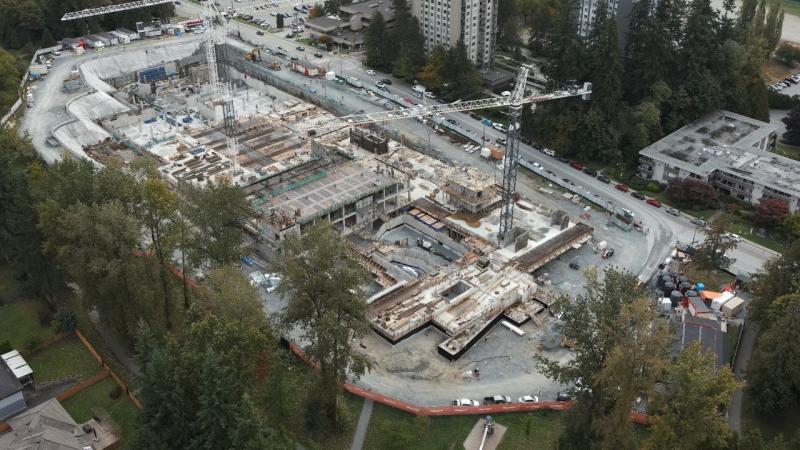
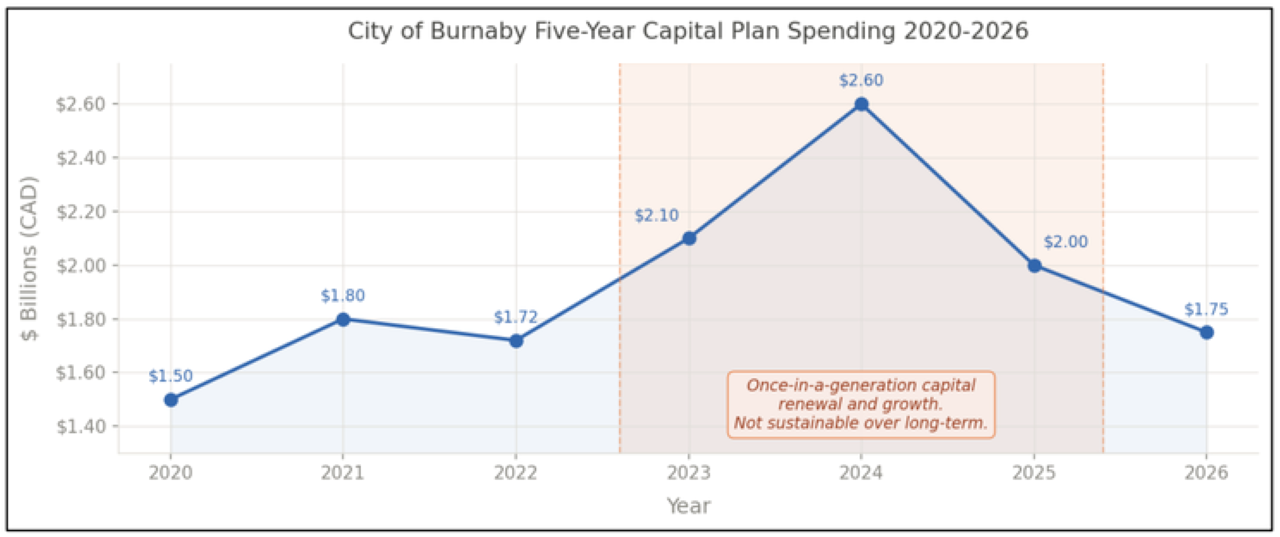
As a City, we are always looking for ways to improve how we serve our community. Over the past few years, Burnaby has delivered a level of capital investment that is unprecedented in the city’s history, including one of the largest municipal investments in community facilities anywhere in Canada.
That scale of activity brings massive progress, but it also creates a perfect opportunity—given the number of projects—to pause, reflect and take timely learnings.
Many of these projects were required because core infrastructure had been left too long without renewal. In some cases, the gaps were significant. The aquatic facilities at Burnaby Lake, for example, were more than 20 years overdue for replacement.
Addressing needs that accumulated over decades inevitably required a concentrated period of investment and delivery. The need for these projects was never in question, but delivering so many of them at once presents obvious challenges.
We now need to ensure that Burnaby does not face a similar catch-up situation again, and that going forward we apply what we have learned to deliver ongoing, efficient, and sustainable capital investment—one that maintains public infrastructure as it ages and supports the city’s long-term needs.
What makes this report matter
As a result, the City commissioned an external and independent review of our capital project delivery—called Building Burnaby Better.
It was commissioned from the Stewart Group, a firm with deep experience reviewing large municipal capital programs. The purpose was to test how Burnaby’s systems, governance, and practices perform against recognized standards through an outside assessment.
A central feature of the report is its recommendations, and crucially all 10 are structured to be implemented within a 24-month period, with clear priorities for immediate action. The report recommends that the City begin with three low-cost, high-impact measures within the first six months.
The first is a Design-to-Budget Policy. In practical terms, this means design teams always working within a clearly defined budget from the beginning, rather than fully designing a project first and then determining its cost afterward. This approach improves cost predictability and helps avoid unexpected increases late in the process.
The decision to release this report publicly also shows how transparency is at the core of everything we do at City Hall. It allows residents to see both what has worked well and where improvements are needed, and it creates a clear basis for accountability as recommendations are implemented.
An engineering feat—Burnaby Lake Overpass is opening to the public this month
The report finds that Burnaby is already a leader in capital project planning and delivery, making use of recognized industry practices such as Integrated Project Delivery—a more collaborative approach where the City, designers and builders work together from the outset rather than in separate stages.
The report cited two fire hall projects that were completed approximately 18 months ahead of schedule and under budget, and noted that contractors consistently describe Burnaby as a preferred public-sector client to work with. But still, we remain committed to identifying where we can improve—both now and for the future of Burnaby—and the commissioning of this report reflects that commitment.
Findings and recommendations
One of the clearest findings in the report is that, at times, the City’s approach to risk management has become overly cautious, and that caution can come at a real cost. While protecting the integrity of public processes is essential, the report notes a divergence with market realities. Staff quite rightly focus on compliance, fairness and risk control, but contractors—particularly smaller and local firms—often see pre-qualification systems and procurement processes as complex, time-consuming and not always worth the effort.
As a result, large pre-qualified lists do not always translate into meaningful competition, and some capable local contractors choose not to participate at all.
This highlights the need to better balance risk management with active competition and value for money. Remembering it’s often better planning that actually delivers greater value rather than additional layers of risk control.
Some important work has already begun on these 10 recommendations. For example, the report recommends mandatory project close-out reports for all capital projects, to systematically capture what worked, what did not, and what should be done differently in the future. The City has already introduced this practice, and staff are now becoming familiar with this type of reporting.
It is recommended however that these will become standardized, template-based reports implemented across all departments, which over time, will help reduce repeated issues around cost, scope and delivery by building an internal knowledge base that carries forward.
Historic investment to be the beating heart of Burnaby
The report also builds on the City’s existing efforts to support local businesses, including work through the Mayor’s Task Force on Economic Growth and Resilience. It recommends a targeted Local Contractor and Small-and-Medium-Enterprise Strategy to make it easier for capable Burnaby-based firms to compete for City work.
This includes applying stronger local preference on smaller projects, where local businesses are most likely to bid, while setting clear price-competitiveness limits to protect value for taxpayers. It also calls for updating qualification and experience requirements so they better match the size and risk of each project, and for using smaller, lower-risk jobs as stepping stones to help local firms gain experience over time.
The goal is straightforward: better competition, more local participation, and more City investment staying in the community—strengthening local businesses, supporting jobs and better aligning capital investment with Burnaby’s economic development goals.
A strong position but with room to grow
Overall, the report makes clear that Burnaby is in a strong position. It reflects positively on the City’s capital project program and recognizes the professionalism and capability of staff.
At the same time, the report and its recommendations show that we can improve how we plan for the future—particularly in deciding when City assets should be upgraded or replaced and in scheduling that work far enough ahead to avoid future backlogs or sudden catch-up periods.
Doing so requires that the lessons in the report be deeply embedded in how the City operates. That includes consistent templates, reporting practices and processes—and effective onboarding—that preserve institutional knowledge beyond individual projects, staff changes or Council terms.
Staff are already reviewing the full set of recommendations, timelines and implementation steps. Putting these into practice will help ensure Burnaby is well prepared to meet the demands of the decades ahead.
Training the skilled workforce that powers Burnaby–with BCIT president Dr. Jeff Zabudsky