Following is a letter to Burnaby residents from Mayor Mike Hurley
As we advance the largest capital construction program in Burnaby’s history, it is important that we explain to residents the financial planning that has made these projects possible. Which means clarifying what are reserves, reserve funds and how must we use them?
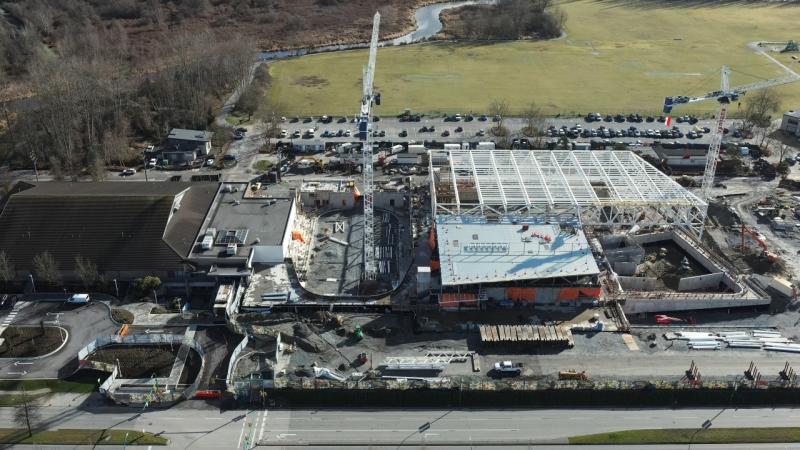
Earlier this year, through one of the largest municipal investments in community facilities anywhere in Canada, four of our most significant civic projects passed the halfway mark: the Burnaby Lake Recreation Centre, the Cameron Community Centre and Library, the Shadbolt Centre Theatre and Art Studios (replacing the former James Cowan Theatre) and the new Community Safety Building.
These are not optional upgrades—they are long-overdue replacements and necessary investments to meet the needs of one of the fastest- growing and densifying cities in the region.
At the same time, major projects like the Brentwood Community Centre are underway, and we have delivered infrastructure such as the Burnaby Lake pedestrian and cycling overpass—an engineering feat now spanning Highway 1.
These projects are not happening by chance. They are the result of a deliberate and disciplined financial strategy that separates how we fund day-to-day operations from how we invest in long-term capital infrastructure.
Day-to-day and long-term planning
Our City’s operating budget funds everyday services—public safety, parks maintenance, libraries and city operations—and, by law, cannot be funded through debt.
It must remain balanced and sustainable year to year. The capital plan, on the other hand, funds the development and renewal of physical infrastructure: community centres, roads, utilities and civic facilities that serve residents for decades. While many municipalities rely heavily on property tax increases or borrowing to fund these projects—costs that ultimately fall back on residents—Burnaby has benefited from the disciplined and sustainable use of reserves and reserve funds.
This has allowed us to invest at historic levels while consistently maintaining one of the lowest tax increases in the region. It is a key reason Burnaby is recognized as one of the most financially stable and well-managed municipalities in Canada.
The major capital investments being delivered in Burnaby right now are funded from reserves rather than debt, allowing projects to proceed without borrowing or direct tax increases tied to these projects.
So how do reserves work?
In simple terms, reserves and reserve funds are monies set aside for specific purposes. Whether by provincial legislation, City bylaw or Council policy designation, they are restricted to defined uses such as financing community amenities like recreation centres, childcare facilities and libraries, or the delivery of active transportation infrastructure.
These reserves and reserve funds cannot then be redirected for other purposes—for example, they cannot be used for operating expenses such as reducing property taxes.
Burnaby has made especially effective use of the Community Benefit Bonus Reserve, which funds local amenities through cash contributions from developers when increased density is approved and on-site delivery is not practical.
These contributions are split 80% to the Community Benefit Bonus Reserve and 20% to the Affordable Housing Reserve, and have helped fund many of the major projects highlighted above.
Turning record period of capital investment into lasting lessons for Burnaby
However, following provincial legislative changes in 2024, the City’s financial framework was redefined with the introduction of Amenity Cost Charges (ACCs) and expanded Development Cost Charges (DCCs). These are now the primary tools for funding capital projects related to growth.
These tools differ from the previous system—they are designed to fund growth-related infrastructure only, not the ongoing maintenance and renewal of existing assets.
As a result, the City has had to introduce a growth infrastructure levy to help ensure the long-term costs of maintaining and replacing infrastructure are properly funded, and to avoid creating another future catch-up scenario. While developers are still contributing similar amounts, those funds are now restricted in use—shifting the remaining cost onto taxpayers.
Managing rising water and sewer costs
As our city grows, so too does the demand on our water and sewer systems and the infrastructure required to support them.
Water and sanitary sewer services—essential to supporting increased density—are delivered through a partnership between Metro Vancouver and the City. Metro Vancouver provides the regional supply of world class drinking water and wastewater treatment, while the City is responsible for the local distribution and collection network, including pipes, pumping stations and maintenance.
Burnaby collects funding directly from residents through a combination of metered charges and the sanitary sewer parcel tax, which is a flat charge applied to properties.
>
A portion of these revenues is set aside in dedicated utility reserves to fund long-term infrastructure and any surpluses are used to help stabilize future rates. While a significant amount is paid to Metro Vancouver and the remainder used exclusively to operate, maintain and renew the City’s infrastructure.
With Metro Vancouver costs rising significantly due to the delivery of major regional projects, many municipalities have passed these increases directly on to residents. Burnaby, through careful use of reserves, has been able to smooth these impacts. By drawing on these funds, the City reduced what residents would otherwise have paid—resulting in a 0% increase for water and 3.5% for sewer in 2026, despite much higher underlying cost increases.
Sustainable growth
City revenues come from a range of sources, some contribute to or are dedicated to specific reserves and reserve funds, while others primarily support the operating budget. The most visible source of City revenue is property tax.
Burnaby’s share of property tax revenue funds essential services that residents rely on every day, from fire protection and policing to parks and recreation. In 2026, Burnaby maintained a property tax increase of just 2.9%—among the lowest in the region. .
It is also important to recognize when reviewing your property tax notice, that almost half of what we collect does not remain with the City, but is due to other authorities such as the Province, Metro Vancouver and TransLink, over which Council has no control.
Beyond property taxes, the City also collects revenue from a range of other sources, including user fees, permits, development-related revenues, utility rates, grants and investment income.
A good example of revenue flowing directly into a designated reserve fund is the cash-in-lieu contributions paid by developers when on-site parking is not provided. Those contributions are deposited into the Off-Street Parking Reserve Fund and used to help fund public parking facilities.
The Gaming Reserve is funded through a provincial share of casino revenues which is used to support environmental, cultural, safety and community projects, while the Equipment and Vehicle Replacement Reserve Fund ensures City equipment and vehicles are replaced on a planned cycle.
Our goal is to avoid sharp spikes in taxes, sudden service reductions, or shifting costs onto future generations. Burnaby’s approach is built on stability—using long-term planning, disciplined reserve use and responsible funding tools to ensure that growth and infrastructure are managed sustainably.
Provincial legislative changes, along with global economic pressures, rising construction costs and continued growth, present real challenges in the future—but our focus remains on steady, predictable decision-making.
It is important that residents understand not just what is being built, but the limits municipalities operate within and where the money comes from for these projects. Ultimately, cities rely on a defined set of revenues, and we have used these tools effectively in Burnaby—delivering long-overdue facilities and major infrastructure while keeping impacts on residents measured and predictable.
Transit’s vital role in connecting Burnaby and the region–with TransLink CEO Kevin Quinn